

Trump Canceling Climate Regs
Air Date: Week of February 20, 2026
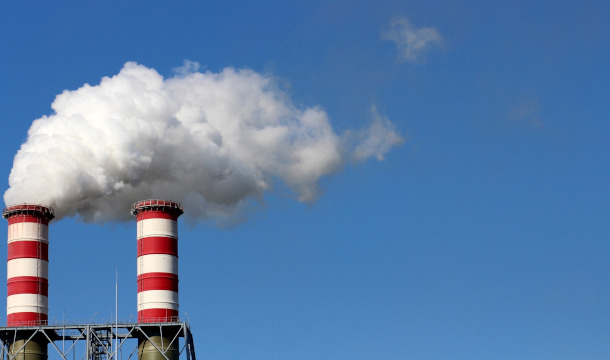
The E.P.A. has moved to repeal its 2009 “endangerment finding,” which says that greenhouse gases endanger human health. (Photo: Adina Voicu, Wikimedia Commons, CC0)
After a landmark Supreme Court case that directed EPA to determine whether carbon dioxide and other greenhouse gases endanger public health, the agency found in 2009 that indeed they do. Now, the Trump EPA is attempting to revoke that endangerment finding to unravel all subsequent regulations on tailpipes, smokestacks and more. Vermont Law and Graduate School emeritus Professor Pat Parenteau explains to Host Jenni Doering why this step is just the beginning of what looks to be a long legal fight.
Transcript
CURWOOD: From PRX and the Jennifer and Ted Stanley Studios at the University of Massachusetts Boston, this is Living on Earth. I’m Steve Curwood.
DOERING: And I’m Jenni Doering.
In the landmark 2007 case Massachusetts versus EPA, the Supreme Court ruled 5 to 4 that carbon dioxide and other greenhouse gases qualify as air pollutants under the Clean Air Act and should be controlled if they endanger public health. And when Barack Obama became president in 2009 the EPA found greenhouse gases do in fact endanger human health and welfare and thus need to be regulated. The EPA did not put a cap on all global warming gases, but focused on major sectors, including tailpipe emissions from vehicles, the smokestacks of power plants, and emissions from oil and gas extraction. Revoking endangerment eliminates such rules and re-ignites the conservative anti regulatory campaign that began in the Reagan era. Repeal of the endangerment finding won’t happen without fights in court, but if the Trump administration does finally win its bid to end federal climate pollution regulation, states may move to curb emissions and expand efforts like the existing regional greenhouse gas initiative. Joining us now is Pat Parenteau, emeritus professor at Vermont Law and Graduate School, and an EPA Regional Counsel under President Ronald Reagan. Pat welcome back to Living on Earth!
PARENTEAU: Thanks, Jenni, it's very good to be with you.
DOERING: Pat, what are the likely consequences of the EPA decision now to rescind this finding, the consequences for public health and the climate?
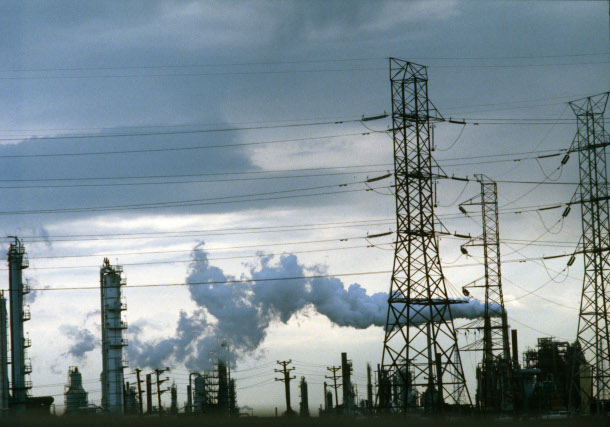
If upheld by the courts, Pat Parenteau says the repeal of the endangerment finding could result in 18 billion tons of additional pollution in the atmosphere, 58,000 additional deaths, and 37 million more asthma attacks in the United States, according to estimates from the Environmental Defense Fund. (Photo: United Nations, Flickr, CC BY-NC-ND 2.0)
PARENTEAU: The consequences cannot be overstated, and they're negative. By repealing the endangerment finding, you're knocking out the foundation for all of the federal government's regulation of carbon pollution and greenhouse gases, whether it's oil refineries, cement plants, every source you can think of that's putting this kind of pollution into the atmosphere. This removes the ability of EPA to regulate any of it. When Trump announced this repeal of the endangerment finding at his press conference, he and EPA Administrator Zeldin were bragging about the fact that this was the largest deregulatory effort in the history of the country. Right along with that, and they didn't acknowledge this, it's the most devastating decision by the federal government endangering public health and welfare in the history of the country. Here are some of the statistics. Eighteen billion tons of pollution will be in the air we breathe and in the atmosphere driving climate change as a result of this decision, if it holds, and we'll be talking about that. Fifty-eight thousand additional deaths will occur as a result of this, and those deaths will come from the effects of climate change, like heat waves, floods, fires, drought, but there's also lots of other kinds of illnesses, respiratory illnesses. There will be 37 million more asthma attacks on Americans as a result of this decision. Those are some of the health effects, but the impacts go well beyond that. They're going to increase fuel prices by an estimated 25 cents per gallon by 2035, if this holds. That can result in $1.7 trillion impacts on consumers. Again, Trump was bragging about the fact that this decision saves $1 trillion, but that's just the cost of compliance for industry. It ignores the cost of climate change.
DOERING: All right, so Pat walk us through what the Trump administration EPA has argued in this move to revoke the engagement finding. How exactly are they framing this?
PARENTEAU: Yeah, so they basically are saying the United States Supreme Court got it wrong in Massachusetts versus EPA. What Zeldin is basically saying is, when I read the Clean Air Act, I don't see in it the authority, the clear delegation of authority to do what the Obama administration did and what the Biden administration built on that and did, right? So this is a frontal attack on the Supreme Court's decision in Mass versus EPA. It's pretty clear the strategy here is to get this case back to the Supreme Court and have it overrule Massachusetts versus EPA and adopt the reading of the statute that Zeldin is arguing instead. And that would have very profound consequences.
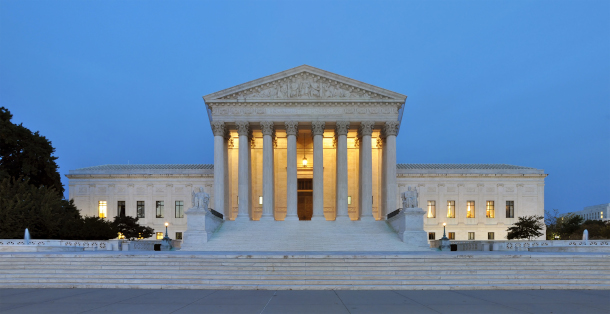
The case may ultimately reach the U.S. Supreme Court, where a decision would have long-term consequences for the E.P.A.’s ability to regulate greenhouse gas emissions. (Photo: Joe Ravi, Wikimedia Commons, CC BY-SA 3.0)
DOERING: Now, Pat in the original proposed rule to revoke the endangerment finding, the Trump EPA seemed to be focusing a little bit on climate denial, on denying the science itself, but I understand that they have really walked that back in this more final rule. So talk to me about that aspect of this.
PARENTEAU: Yeah, I mean, they're basically saying science doesn't matter because we're saying we don't have the legal authority to do anything about it. It's, well, it's too bad if, in fact, the science is accurate, because we can't do anything about it. So they have totally shifted the focus. Zeldin has, wisely, I would say, decided, I'm not going to attack the science, which is rock solid. But then when you think about it, so you're admitting that there's a danger. You're not denying there's a danger. You're saying you can't do anything about it? That's what he's doing.
DOERING: So Pat. How solid are the legal grounds of this action by EPA? I mean, to what extent can they simply rescind this landmark finding in a single action?
PARENTEAU: Yeah, well, they can't do it by themselves. You know, I've worked up three scenarios for you, okay? So there are lots of different ways this could go. The first scenario is, it's not clear that this case can even get to the Supreme Court before the clock runs out on the Trump administration, right? He's got less than three years to go. This case will be ripe, as we say, for litigation. It goes to the United States Court of Appeals for the District of Columbia, what we call the DC Circuit. It's a very expert court. It's also a court that isn't dominated by conservatives. So the question is, can Trump and Zeldin manage to get through the DC Circuit and up to the Supreme Court before, as I would put it, they turn into a pumpkin at the end of their term? I think there's a 50/50 chance it won't get there in time. The reason that's significant is because if the next president, which we can only hope to God, shows more of an understanding of the threat of climate change and more of a commitment to do something about it, they could reinstate, they could repeal the repeal, and they could reinstate the endangerment finding. So you see the incredible significance of the clock right now. If Trump can't get this to the Supreme Court and win in the Supreme Court before he's done, the next president can erase all of this.
DOERING: So that's scenario one. What's the second scenario, Pat?
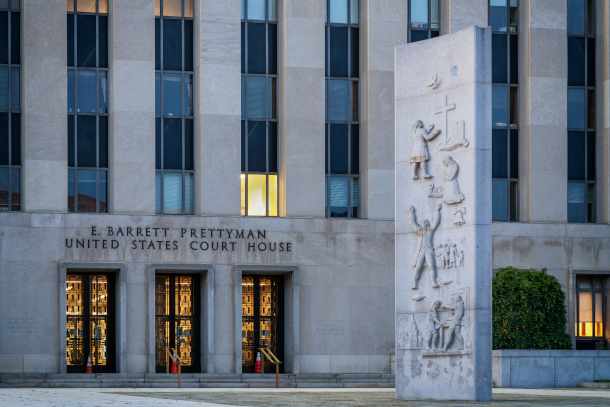
Our guest Pat Parenteau predicts that the United States Court of Appeals for the District of Columbia, or the DC Circuit, may issue a “stay” or pause of implementation of the repeal of the endangerment finding if requested. (Photo: Tony Webster, Wikimedia Commons, CC BY 2.0)
PARENTEAU: The second scenario, then, is Trump does get the thing to the Supreme Court before he's done, but he loses, okay? He loses five to four, the same way George W Bush lost five to four in Mass versus EPA. How does that happen, right? Well, this is a head count exercise. You start with the three liberal so-called justices, what I call the three sisters, right? You got to have their votes, but it's pretty clear you do have their votes to uphold Massachusetts versus EPA. And you know, the Trump administration is counting on Chief Justice Roberts being in their corner, but subsequently, the Chief Justice has said, I think Massachusetts versus EPA is settled law, so you don't have his vote going in. So then you go down the list, you know you're going to get Justice Thomas, Justice Alito and probably Justice Gorsuch. You're probably going to get Justice Kavanaugh, because Justice Kavanaugh has been very critical of EPA regulation under the Clean Air Act in the past. So there's four votes. Where does the fifth vote come from? It comes down to Justice Barrett. So I think she's the swing vote in this case, if it gets there, and I think from a decision that she rendered in a very important Clean Water Act case, I think she's going to have trouble seeing that if the science says this is a danger, if the Supreme Court, 19 years ago, said that EPA had the authority to regulate it, I don't think she's going to say, overrule it. So that's why I think there's a 60 to 40 chance if it gets to the Supreme Court in time, Trump loses.
DOERING: All right, so what's the third scenario?
PARENTEAU: Yeah, so the third scenario, if you're still with me, is Trump wins in the Supreme Court, God forbid, in my view, but I have to acknowledge that's definitely a possibility, right? If that happens, then a future president can't do anything about it. That's the significance of that. Once the Supreme Court has ruled, EPA no longer has the authority to regulate greenhouse gases. Only Congress can reinstate that authority. A future president is hamstrung. Can't do anything about it.
DOERING: So Pat, just to clarify, has the endangerment finding actually been revoked by this action by EPA, or does that not happen until the legal battles have been settled?
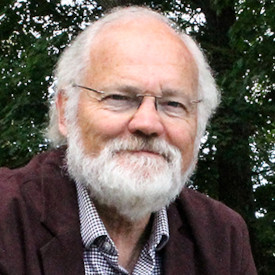
Pat Parenteau served as an EPA regional counsel under President Ronald Reagan and he’s currently an emeritus professor at Vermont Law and Graduate School. (Photo: Vermont Law and Graduate School)
PARENTEAU: Oh, no, it does happen. Technically, here's what happens. The rule is published in the Federal Register, and then 60 days later, the repeal of the tailpipe standards takes effect, okay? So we're still in a two-month window right now, but when that takes effect, it's automatic. So here's what I predict is going to happen in response to that. The Attorneys General of California and Massachusetts have already announced, no surprise, they're going to challenge this, and I predict that the first thing they're going to do in the Court of Appeals for the District of Columbia is to move for what we call a "stay," okay, of the rule, which means put a pause on the rule while the case works its way out. I think they have a very strong case to do that. Think about it, this decision overturns again 19 years of regulation. It proposes to overturn a Supreme Court decision that's already on the books. The point is, the District of Columbia court is going to say, I think it's going to say, a stay of this rule is entirely appropriate. Given all of that, what's the hurry? That's a long-winded answer, but it means that the rule will take effect unless the DC Circuit puts a stay on it.
DOERING: So it sounds like this is really just the beginning of the process of repealing this finding.
PARENTEAU: I would say so, and that's why I say I think it's going to take longer than three years to sort it out.
DOERING: Pat Parenteau served as EPA Regional Council under President Ronald Reagan, and he's currently an emeritus professor at Vermont Law and Graduate School. Thanks again so much, Pat.
PARENTEAU: Thanks for having me.
Links
Heritage Foundation | "Heritage Praises Trump Administration Rollback of Endangerment Finding"
Learn more about Pat Parenteau
The New York Times | “E.P.A. Faces First Lawsuit Over Its Killing of Major Climate Rule”
Living on Earth wants to hear from you!
Living on Earth
62 Calef Highway, Suite 212
Lee, NH 03861
Telephone: 617-287-4121
E-mail: comments@loe.org
Newsletter [Click here]
Donate to Living on Earth!
Living on Earth is an independent media program and relies entirely on contributions from listeners and institutions supporting public service. Please donate now to preserve an independent environmental voice.
NewsletterLiving on Earth offers a weekly delivery of the show's rundown to your mailbox. Sign up for our newsletter today!
 Sailors For The Sea: Be the change you want to sea.
 The Grantham Foundation for the Protection of the Environment: Committed to protecting and improving the health of the global environment.
 Contribute to Living on Earth and receive, as our gift to you, an archival print of one of Mark Seth Lender's extraordinary wildlife photographs. Follow the link to see Mark's current collection of photographs.
 Buy a signed copy of Mark Seth Lender's book Smeagull the Seagull & support Living on Earth
© Copyright World Media Foundation. All Rights Reserved
Home | Contact | RSS | Donate | Newsletter