

Extreme Heat and Tooth Decay
Air Date: Week of July 17, 2026
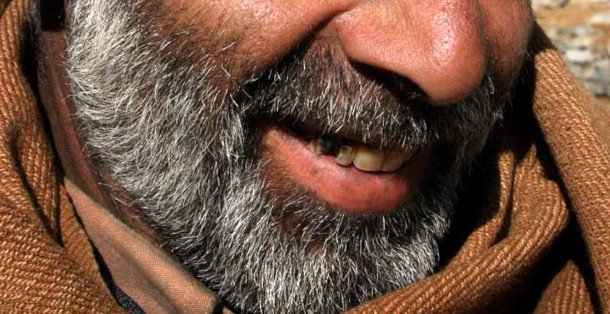
New Pakistani research reveals a negative link between extreme heat and the deterioration of teeth, tied to reduced rates of saliva production. (Photo: Steve Evans, Wikimedia Commons, CC BY-SA 2.0)
The extreme heat that’s becoming far more common in a warming world is now being linked to dental problems. As the body prioritizes sweat for cooling over saliva production, the resulting dry mouth can have devastating impacts on your teeth. That’s according to Dr. Zain Azhar, a dentist in Pakistan who is documenting a tooth decay trend among his patients who work outdoors in the heat for prolonged periods, and he spoke with Host Aynsley O’Neill.
Transcript
DOERING: From PRX and the Jennifer and Ted Stanley Studios at the University of Massachusetts Boston, this is Living on Earth. I’m Jenni Doering.
O’NEILL: And I’m Aynsley O’Neill.
The extreme heat that’s becoming far more common in a warming world is now being linked to some health impacts you might not expect. Namely, on your teeth. Extreme heat can lead to extreme dehydration, and that can take the form of not only exhaustion and brain fog, but it can even start to turn part of your body against you, prioritizing sweat for cooling over saliva production as your body goes into survival mode. And when your mouth gets too dry, that can have devastating impacts on your teeth, according to new research being done in Pakistan.
AZHAR: Without adequate saliva, and I mean genuinely adequate saliva, not just the minimal amount needed to swallow, teeth begin to demineralize within weeks. A process that becomes increasingly difficult to reverse.
O’NEILL: That’s Dr. Zain Azhar, a dentist, healthcare writer, and journalist in Okara, Pakistan who calls saliva a “physiological fortress” because of how it protects our teeth. He’s been looking into the effect that extreme heat has on the oral health of local farmworkers, who are regularly working outdoors in 110 degree Fahrenheit heat, often without access to shade or clean drinking water. And of course, as our planet warms, hot days are getting both hotter and more frequent. Earlier this year, several cities in Pakistan saw temperatures over 122 degrees Fahrenheit. Dr. Azhar wrote about his research on heat and tooth decay for Earth Island Journal, so I called him up, and started off asking him about his patient Rashid, a 32 year-old farmworker who had lost eight teeth in only two years. Rashid was losing teeth not from dental neglect but from a perpetually dry mouth.
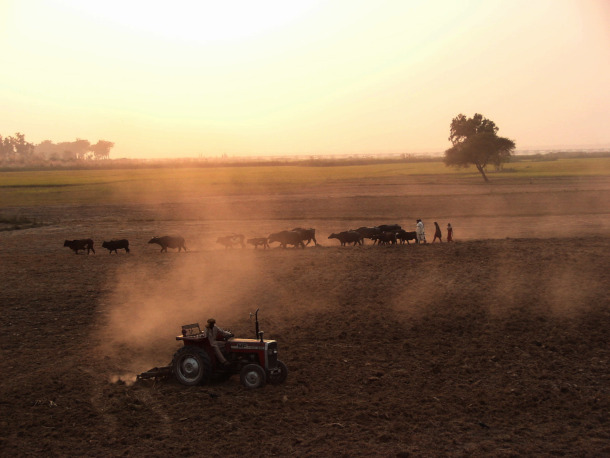
More heat-intense days are making the conditions for Pakistani outdoor workers unbearable with temperatures reaching peaks of 122 degrees Fahrenheit. Shown above is a farmworker in the Bajwat sector of Sialkot District in Punjab, Pakistan. (Photo: Bilal Farhat Ullah, Wikimedia Commons, CC BY-SA 4.0)
AZHAR: His was not the gradual erosion from poor hygiene or untreated cavities that you would expect in communities with limited access to healthcare. This was aggressive systemic dissolution, as if teeth were being chemically attacked from the inside out, dissolved by forces entirely beyond individual control or comprehension. So, like most outdoor laborers during peak season, Rashid used to drink 15 to 20 liters of water daily to survive the relentless heat. So, he chews on sugar cane during breaks, which provides quick calories, and nothing about his general health seemed unusual at first. But when I asked about saliva, that often overlooked component of oral health that most people never think about, there was a long pause. He said, "My mouth is always dry. Even when I drink water until I feel sick, my mouth stays dry.” So that's when something clicked into place that would fundamentally reshape my understanding of what I had been observing in my practice.
O’NEILL: And Dr. Azhar told me, the extreme heat was not the only environmental factor in the population losing teeth. As the planet heats up, evaporation means that drinking water in this part of Pakistan is seeing more concentrated salt levels. So when workers try to hydrate themselves, the brackish water ends up contributing to this dental decay.
AZHAR: So Pakistan's agricultural zones are experiencing a dramatic drop in groundwater due to reduced rainfall and high rates of evaporation from freshwater bodies. This, in turn, is concentrating dissolved salts in the groundwater, turning it more brackish during dry months, so regular consumption of brackish water, which we mean water with elevated salt content, it creates an osmotic effect inside the mouth, pulling moisture out of oral tissues and worsening the dry mouth conditions caused by heat stress. So when workers drink from these compromised sources during extreme heat, they are consuming water that may already be either slightly acidic or mineral poor. So combined with heat-induced salivary changes, this creates a knock-on effect.
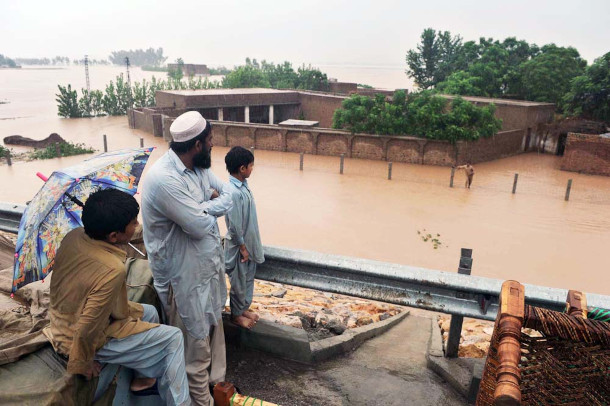
Shown above are Pakistani citizens during a flood in 2010. Many Pakistani water sources can become contaminated with nitrates and phosphates during monsoon season. These increase the acidity of the groundwater. At the same time, evaporation rates due to high temperatures leave behind brackish water, which has a higher salt content than freshwater. Ultimately drinking this water ends up pulling more moisture from mouths, leaving them dry. (Photo: IRIN Photos, Flickr, CC BY-NC-ND 2.0)
O’NEILL: Noticing a pattern, Dr. Azhar started to survey patients, all outdoor workers dealing with the extreme heat and the brackish water combined, throughout the Pakistani state of Punjab. He conducted some pH testing and discovered that in 42 of his 73 climate-exposed patients, their mouth pH was below a 5.5, an extremely acidic environment compared to a healthy mouth which is closer to a neutral pH of 7. To quote Dr. Azhar’s article, “at 5.2 pH, enamel doesn’t just demineralize slowly; it actively dissolves, like chalk in vinegar.” And for these patients, losing teeth affects their ability to eat and speak, and that affects their careers, social lives, and even marriage prospects.
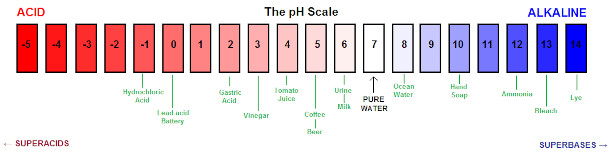
The average mouth should have a pH level closer to the neutral zone of 7. Dr. Azhar’s patients were ranging in more acidic territories of 5.2-5.5. (Photo: Piercetheorganist, Wikimedia Commons, public domain)
AZHAR: There is a stigma associated with having bad or no teeth. Nasreen, another patient from Lahore, households hiring for in-home roles have turned her away, telling her she appeared unclean. So she said, “In my community, a woman without teeth is considered unmarriageable. It's not stated explicitly, but everyone knows it. My younger sisters,” according to her, “my younger sister's marriage prospects are affected too because people talk. They wonder if there is something genetically wrong with our family."
O’NEILL: Dr. Azhar told me about grassroots movements to try to help guard against these issues. Temporary solutions include shifting work hours to avoid the hottest parts of the day, or providing outdoor workers with clean water and electrolyte drinks. And as a country, Pakistan declared climate change a national security priority back in 2022, and climate solutions are gaining traction there, including a big jump in solar energy. Of course, as Dr. Azhar points out, Pakistan may be a case study here, but it’s not the only place where this is happening.
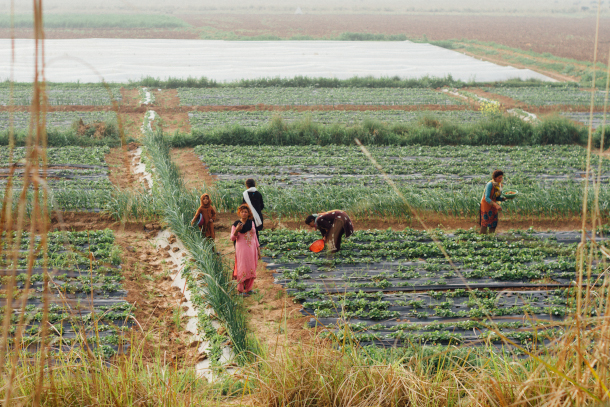
To counteract the intense daytime temperatures, some local Pakistani grassroots movements began encouraging outdoor laborers to shift working hours to cooler hours of the day. (Photo: Adam Cohn, Flickr, CC BY-NC-ND 2.0)
AZHAR: Global warming is a global problem. Climate change is a global problem. So, if climate change is affecting Pakistani people, then the human beings living around the world are the same; they will affect in the same way. Like recently, you can see the heat wave which has hit Europe. This is the result of climate change. People are dying there. So, basically, oral health is ignored because due to dental issues, people do not die instantly. They die instantly due to heat stroke. They die instantly due to cardiac failure. They die instantly due to cardiac arrest. But they do not die instantly due to dental issue. But you can see that the dental issue is causing them their lives. The climate change is affecting the oral health of these patients, which is directly affecting their economy and everything. So I would like to repeat the words of my dear patient Rashid, which is the main highlight of the story. He said to me when I asked him that what he wanted people to know about what's happening to him and others like him. So he told me that “tell them that climate change is not abstract. It's here right now in my mouth, in my family's survival, in my ability to work and eat and live with dignity. It's not just teeth. It's my entire future, and I am not alone. Every farmer I know is experiencing this. We are all getting older before our time. We are all becoming invisible.” Can you imagine? These are the words by an uneducated Pakistani person. So you can assess the damage that has been done by climate change to us.
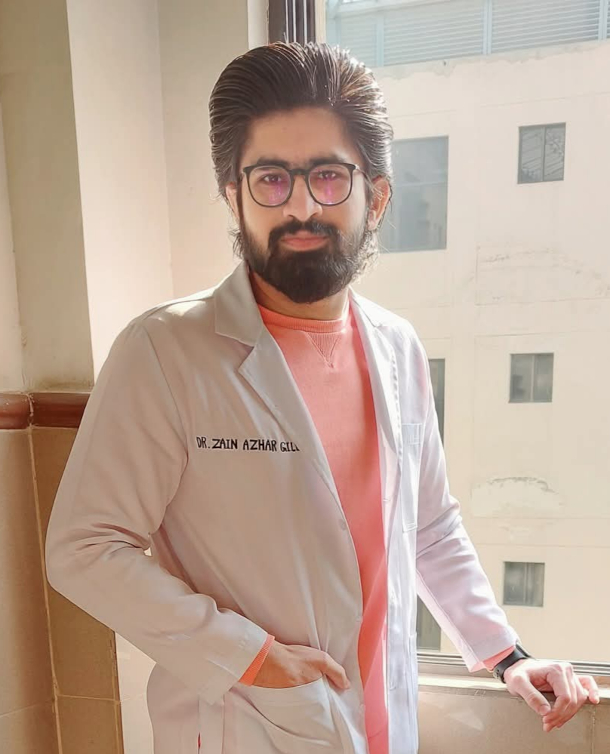
Dr. Zain Azhar Gill is a dentist, healthcare writer, and journalist in Okara, Pakistan. (Photo: Courtesy of Zain Azhar Gill)
O’NEILL: That’s Dr. Zain Azhar, a dentist, healthcare writer, and journalist in Okara, Pakistan. His article When the Heat Steals Your Smile was published in Earth Island Journal.
Links
Living on Earth wants to hear from you!
Living on Earth
62 Calef Highway, Suite 212
Lee, NH 03861
Telephone: 617-287-4121
E-mail: comments@loe.org
Newsletter [Click here]
Donate to Living on Earth!
Living on Earth is an independent media program and relies entirely on contributions from listeners and institutions supporting public service. Please donate now to preserve an independent environmental voice.
NewsletterLiving on Earth offers a weekly delivery of the show's rundown to your mailbox. Sign up for our newsletter today!
 Sailors For The Sea: Be the change you want to sea.
 The Grantham Foundation for the Protection of the Environment: Committed to protecting and improving the health of the global environment.
 Contribute to Living on Earth and receive, as our gift to you, an archival print of one of Mark Seth Lender's extraordinary wildlife photographs. Follow the link to see Mark's current collection of photographs.
 Buy a signed copy of Mark Seth Lender's book Smeagull the Seagull & support Living on Earth
© Copyright World Media Foundation. All Rights Reserved
Home | Contact | RSS | Donate | Newsletter