

Loon in Fog
Air Date: Week of July 17, 2026

Loons make their home in the waters of Seney National Wildlife Refuge. (Photo: © Mark Seth Lender)
The iconic loon with its haunting, far-reaching call can be found in many lakes and wetlands throughout North America, including at the Seney National Wildlife Refuge in Michigan. That’s where Living on Earth Explorer in Residence, Mark Seth Lender spotted a pair one foggy morning.
Transcript
O’NEILL: Minnesota, which is home to Voyageurs National Park, has the most loons in the Lower 48. But you can find these birds in many lakes and wetlands throughout North America, including at the Seney National Wildlife Refuge in Michigan. That’s where Living on Earth Explorer in Residence, Mark Seth Lender spotted a pair one foggy morning.
Loon in Fog
Seney National Wildlife Refuge
© 2025 Mark Seth Lender
All Rights Reserved
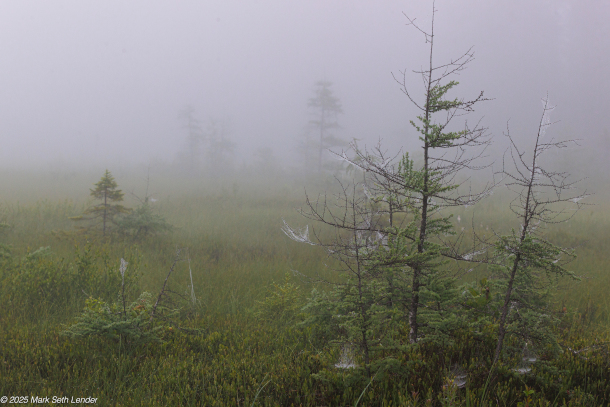
Strings of droplets trace the architecture of spiders in the morning fog. (Photo: © Mark Seth Lender)
LENDER: The hour cannot be tolled by the light. Fog has made its own time of day. A luminous magic gray. Within gray. And yet reveals. Loon. Asleep. Turning and turning in the eddy of the spillway as the ponds pour, each into the other. One above. One below. And the spider webs along the edges are aglow, the droplets gemlike on the strands. Like ripples stilled in place.
The quality of an ice storm on this the Longest Day.
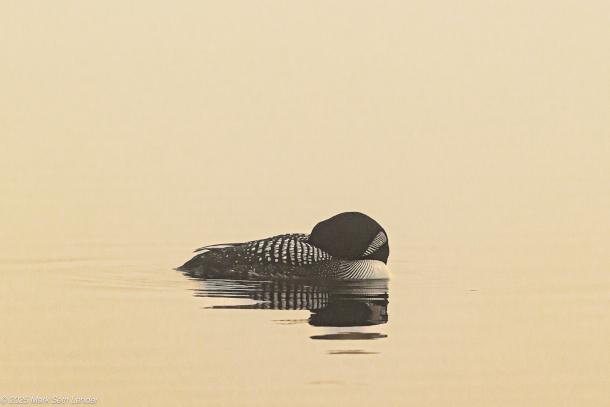
A sleeping loon rests and drifts on the water. (Photo: © Mark Seth Lender)
Loon wakes. To make a certainty of the safety promised here. And safe, tucks between the wings.
Not far, another Loon. Looking this way and that way. Seeking, and seeking. Not long and sunrise breaks. The colors of smoke, orange and gold and the water scored black by shadows. How the fog trembles in the arcade of light cast in a narrow column by the sun. Paddling through her path is straight. Will each of them find the other?
This is the thing discovered only in the wake made by Time.
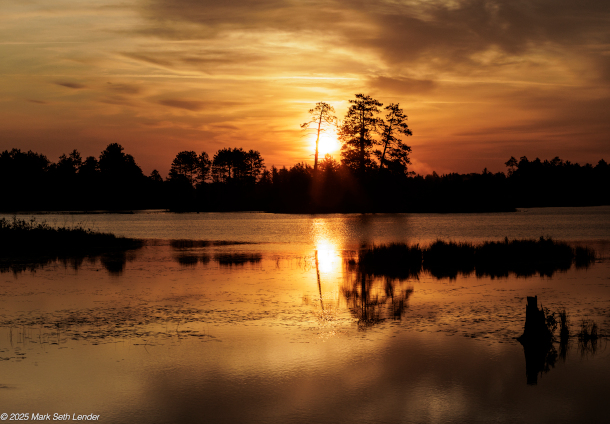
Sunrise arrives in orange and gold, a slow unfolding of light. (Photo: © Mark Seth Lender)
O’NEILL: That’s Living on Earth Explorer in Residence, Mark Seth Lender and you can find his beautiful pictures of loons on our website, LOE dot org.
[LOON CALL: Canadian Loons in family.wav by laurent -- https://freesound.org/s/163300/ -- License: Attribution NonCommercial 4.0]
O’NEILL: And this of course is the haunting call of the loon.
[LOON CALL: Canadian Loons in family.wav by laurent -- https://freesound.org/s/163300/ -- License: Attribution NonCommercial 4.0]

A loon paddles, carving ripples across a quiet pond at sunrise. (Photo: © Mark Seth Lender)
O’NEILL: Mated pairs of loons often make this far-reaching wail to communicate across long distances. Loons are also known for their territorial or warning “tremolo” call if you get too close to their chicks. Another name for it is the “crazy laugh.”
[LOON CALL: Canadian Loons in family.wav by laurent -- https://freesound.org/s/163300/ -- License: Attribution NonCommercial 4.0]
Links
Living on Earth wants to hear from you!
Living on Earth
62 Calef Highway, Suite 212
Lee, NH 03861
Telephone: 617-287-4121
E-mail: comments@loe.org
Newsletter [Click here]
Donate to Living on Earth!
Living on Earth is an independent media program and relies entirely on contributions from listeners and institutions supporting public service. Please donate now to preserve an independent environmental voice.
NewsletterLiving on Earth offers a weekly delivery of the show's rundown to your mailbox. Sign up for our newsletter today!
 Sailors For The Sea: Be the change you want to sea.
 The Grantham Foundation for the Protection of the Environment: Committed to protecting and improving the health of the global environment.
 Contribute to Living on Earth and receive, as our gift to you, an archival print of one of Mark Seth Lender's extraordinary wildlife photographs. Follow the link to see Mark's current collection of photographs.
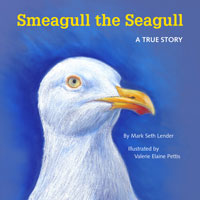 Buy a signed copy of Mark Seth Lender's book Smeagull the Seagull & support Living on Earth
© Copyright World Media Foundation. All Rights Reserved
Home | Contact | RSS | Donate | Newsletter