
April 24, 2026
Air Date: April 24, 2026
FULL SHOW
SEGMENTS
Boundary Waters Mining Threat
View the page for this story
On April 16 the US Senate voted to reverse a moratorium on mining near the Boundary Waters Canoe Area Wilderness in Minnesota, a million acres on the US-Canada border that’s teeming with wildlife and crystal-clear waters. For years a Chilean company has proposed to extract valuable copper, nickel, and cobalt there using copper sulfide mining. Democratic Senator from Minnesota Tina Smith speaks with Host Jenni Doering about why in her view mining in the same watershed as the Boundary Waters is not worth the risk. (12:09)
Extraction: The Frontiers of Green Capitalism
View the page for this story
While electrifying transportation is essential to addressing the climate crisis, the mining of nickel, copper, and lithium required to build out these green technologies brings its own environmental and social costs. To understand these impacts, author and political scientist Thea Riofrancos traveled to the Atacama Desert in Chile, home to one of the largest lithium reserves in the world. She joins Host Paloma Beltran to discuss her book, Extraction: The Frontiers of Green Capitalism. (17:17)
Community-Led Wildfire Prevention in Africa
View the page for this story
Nigerian conservation ecologist Iroro Tanshi rediscovered the short-tailed roundleaf bat in 2016, after decades when it was believed extinct in the region. The species is still critically endangered, with habitat loss from wildfires as one of its top threats. So Iroro joined with local groups to start a community-led program to develop safer field burning practices and wildfire fighting strategies. Iroro Tanshi is the recipient of the 2026 Goldman Environmental Prize for Africa and talks with Host Jenni Doering. (16:44)
Show Credits and Funders
Show Transcript
260424 Transcript
HOSTS: Steve Curwood
GUESTS: Thea Riofrancos, Senator Tina Smith, Iroro Tanshi
[THEME]
DOERING: From PRX – this is Living on Earth.
[THEME]
DOERING: I’m Jenni Doering.
BELTRAN: And I’m Paloma Beltran.
Lithium mining's environmental and social impact in Chile
RIOFRANCOS: These companies do not operate in a vacuum. It is a contested terrain in which different voices and viewpoints are battling to figure out what is the best way to govern lithium in Chile and govern these critical minerals in general.
DOERING: Also, Congress clears the way for mining near the Boundary Waters of Minnesota.
SMITH: For well over 100 years there has been a bipartisan consensus that there are special places in this country that need to be set aside, not for nobody to ever go to but set aside for everybody in the country to be able to enjoy.
DOERING: Plus the Goldman environmental champions – that’s this week on Living on Earth. Stick around!
[NEWSBREAK MUSIC: Boards Of Canada “Zoetrope” from “In A Beautiful Place Out In The Country” (Warp Records 2000)]
[THEME]
Boundary Waters Mining Threat
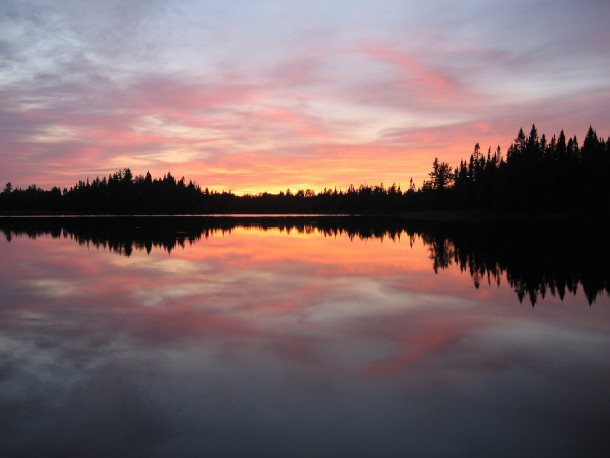
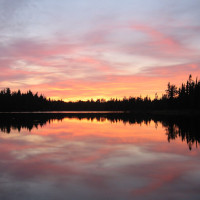
Sunset over Pose Lake, a small lake accessible only by foot, in Boundary Waters Canoe Area Wilderness, Minnesota. (Photo: R27182818, Wikimedia Commons, CC BY-SA 3.0)
BELTRAN: From PRX and the Jennifer and Ted Stanley Studios at the University of Massachusetts Boston, this is Living on Earth, I’m Paloma Beltran.
DOERING: And I’m Jenni Doering.
The Boundary Waters Canoe Area Wilderness in Minnesota protects over a million acres on the US-Canada border that’s teeming with wildlife and crystal-clear waters. But the region is rich in copper and other minerals, which Twin Metals, a subsidiary of the Chilean company Antofagasta, has proposed to mine. Wilderness advocates say the risks of mining in the same watershed as the Boundary Waters are simply too high. And in 2023 after extensive review and public comments, the Biden administration put in place a 20-year mining moratorium. Then, on April 16th of this year the US Senate voted to reverse that moratorium after the House had done the same. They did so using the Congressional Review Act, greatly expanding the interpretation of the law in a way that could make other long protected areas across the country vulnerable to development. The 50-49 vote was mostly along party lines, though Republican Senators Thom Tillis and Susan Collins joined Democrats in opposition. Democratic Senator from Minnesota Tina Smith has been a vocal opponent of mining in the Boundary Waters and she joins me now. Senator, welcome to Living on Earth!
SEN. SMITH: Well, thank you. I'm so glad to be talking with you today.
DOERING: So Senator, you held the Senate floor for hours in an attempt to convince your colleagues to leave this 2023, 20-year moratorium on mining in the Boundary Waters intact. Why was it so important to you to make that case?
SEN. SMITH: I know that the Boundary Waters is so important to Minnesota, and that was the main reason. Of course, it's so important to literally millions of people around the country. And I don't know if you've ever been to the Boundary Waters, but it is a million acres of bog and river and stream and lake. It is an incredible resource. The water is so clean in the Boundary Waters that you literally can drink it out of the middle of the lakes. And it is a non-motorized wilderness area. So when you are there, you are completely away from the modern technology and noise and all of that. You're surrounded by nature in a really incredible way, and I know how precious this is, and I believe that these unique and precious places that belong to all of us should be protected for all of us. And I will just tell you that I was there just for a day trip last summer, and we paddled around. We had an amazing shore lunch, and it was beautiful weather, and we saw two wolves just in one day while we were, you know, in for just a day. And that gives you an idea of how exceptional this place is.
DOERING: So how far back does this fight over whether to mine in the Boundary Waters area go? And what are some of the main concerns about that mining?
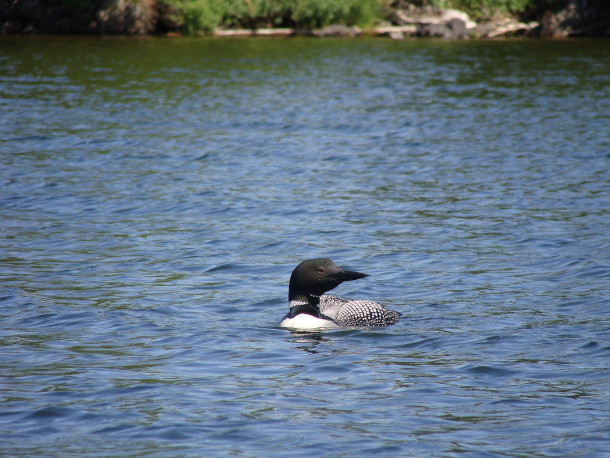
A common loon at Pickle Lake situated within Boundary Waters Canoe Area Wilderness. The area was first protected in 1909. (Photo: Timothy Riley, Wikimedia Commons, CC BY-SA 3.0)
SEN. SMITH: Yeah, well, it goes back for many, many years. And, you know, it's interesting, I think, to think about the history of this place. So imagine this million acres of lake and bog, and it's right on the US, Minnesota-Canadian border, right next to Voyageurs National Park. Of course, human beings have been in this part of the world for hundreds and hundreds and hundreds of years. It is the traditional homeland of the Anishinaabe people during the fur-trapping Hudson Bay years, it was also the place where there were people trapping beaver and hunting and fishing. And over the years, though, this particular place has been set aside and protected starting in like 1909, I think, when the first protections were put in place. In 1978 the Boundary Waters Canoe Area Wilderness was protected as a non-motorized wilderness area. And meanwhile, now in many other places in northern Minnesota, there's been a lot of mining that has gone on. This is traditionally also a mining part of Minnesota. Minnesota is a mining state, the largest producer of iron ore in the whole country. My view, and I think the view of most Minnesotans, is we support mining, but not this particular mine in this particular place. And this mine is unique because it is a copper sulfide mine, which is a very dangerous and polluting kind of mine to build. Every single time that this kind of mine has been built, it has resulted in polluting the watershed, and that's why it is so dangerous here, because this is a very wet, as I said, damp, boggy part of the country, and that copper sulfide pollution flows into the Boundary Waters, and it can move hundreds of miles through the watershed and do great damage.
DOERING: Yes, I mean just how close would the mining be, and why is there this connection of the water systems up there?
SEN. SMITH: So this mine is not in the Boundary Waters, but it is on the doorstep of the Boundary Waters. It is extremely close to this lake called Birch Lake that connects to the Boundary Waters. What you see with this kind of mine is, essentially what happens is that you mine this rock that has copper and sulfur in it, you bring it up to the surface, hundreds and hundreds of tons of this rock, it sits on the surface, and then the sulfur in the rock immediately interacts chemically with oxygen and the water in the air and on the ground, and it basically turns into sulfuric acid, like battery acid. And what happens is, then, of course, that there's that hundreds of millions of tons of rocks. It's just forever. It's not like it goes anywhere after it's been processed and the copper has been taken out. And though the mining companies will say that they have ways of containing this and that they have ways of protecting the watershed, of course, as I've said, in 100% of the cases, that has not been the case, and particularly right here in this place, which is so dangerous.
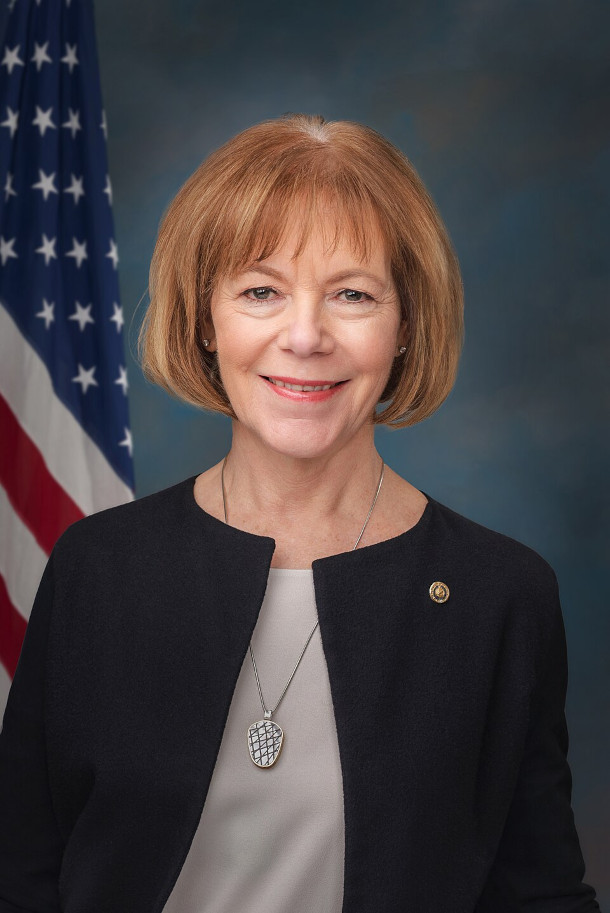
United States Senator Tina Smith (D-MN) held the Senate floor for hours trying to convince her colleagues to leave in place a moratorium on mining near the Boundary Waters. (Photo: Rebecca Hammel, U.S. Senate Photographic Studio, Wikimedia Commons, public domain)
DOERING: Senator, proponents of this mine do say that this operation could be a huge financial gain for the US, for Minnesota, these valuable copper reserves there in the ground, near boundary waters. So how do you weigh the economic benefits versus the costs here?
SEN. SMITH: I'm very empathetic to the economic argument, and I think it's important, though, to balance the economic benefits of this mine in this place, with the economic benefits of not building the mine in this place. And in fact, there have been studies done that show that over the life of the mine, which is probably only about 15 years or so, the economic benefits of not building it are greater because this is a thriving outdoor recreation economy. In the Ely Grand Marais area, there are hundreds of small businesses that support their families and support the local economy. There are 150,000 people who visit the region every year, and they spend their money. And of course, that only works if this is the pristine place that it is today.
DOERING: What have you been hearing from your constituents about this?
SEN. SMITH: Oh, man. I mean, this fight has really captured the heart and this imagination of Minnesotans and I think people all over the country. I went home on Friday and I was traveling around the state, in a completely different part of the state. And so many people came up to me and just said, "Thank you, Tina, for fighting for the Boundary Waters." I believe that the public opinion polling shows that something like 70% of Minnesotans don't want to see this mine built in this place. And I feel like a lot of them came up to me.
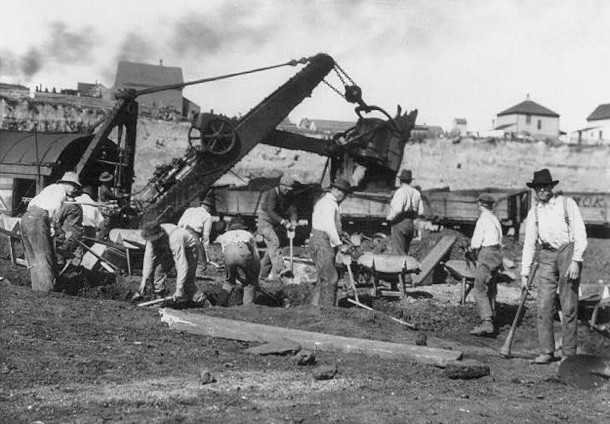
Miners at work on the Mesabi Iron Range in northeast Minnesota, US, in 1903. The state has a long mining history, being the largest producer of iron ore in the country. (Photo: Frances Benjamin Johnston, Wikimedia Commons, public domain)
DOERING: Why does this issue matter to the Indigenous peoples in the area? I mean, you mentioned the Anishinaabe peoples who have lived there for thousands of years.
SEN. SMITH: So that is such a great point. And I am so grateful for the ways that the Minnesota Chippewa tribes, the Anishinaabe tribes, spoke so strongly about their treaty rights here. The Superior National Forest, which is right next to the Boundary Waters and the Boundary Waters itself are all part of the land that is covered by the 1854 Treaty of La Pointe. Okay, so this was a treaty between the federal government and the Chippewa tribes, saying that, in exchange for the tribes giving up their ancestral lands, that they would maintain hunting and fishing rights, and also the rights to harvest wild rice, which is prevalent in the Boundary Waters. Manoomin is what the Anishinaabe people call wild rice. And there is no doubt that this mine because of the pollution that would happen because of this sulfuric acid, this sulfide acid would do great damage to those hunting and fishing rights. And of course, the tribes treaty rights to this land can't just be abrogated by an act of Congress. I mean, those treaty rights are enshrined in the treaty and in the Constitution. It goes back to the fundamental sovereignty of tribes in northern Minnesota and all over the country. And boy, did they organize and connect with people about how this was so important to them.
DOERING: So you mentioned the protections being put in place in 1909 and that was when Theodore Roosevelt was president. He was the first to conserve the Superior National Forest where Boundary Waters sits, and that was as part of this larger tradition in American history of conserving public lands. But that tradition seems to be changing now, in some ways, with the Trump administration aiming to open up public lands to more logging, more drilling. How do you see that change, and what might that mean for the future of the country?
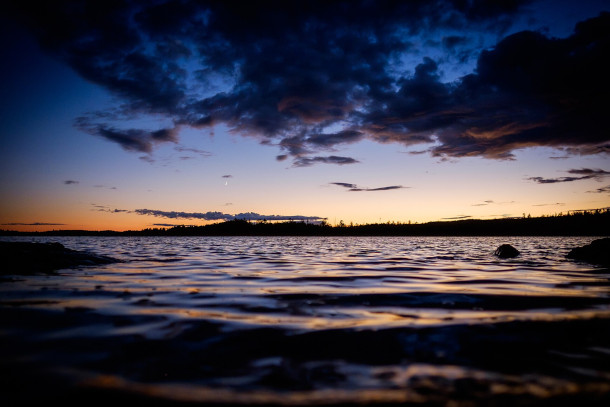
A dark sunset is reflected on Alice Lake in Minnesota’s Boundary Waters Canoe Area Wilderness. (Photo: Dan Carlson, Wikimedia Commons, public domain)
SEN. SMITH: What you say is exactly right, that for you know, well over 100 years, there has been a bipartisan consensus that there are special, precious places in this country that need to be set aside, not for nobody to ever go to, but set aside for everybody in the country to be able to enjoy and that they belong to all of us, and the Boundary Waters is very much a part of that tradition and that value that has been bipartisan. If you think about Yosemite or the Grand Canyon or Yellowstone or Voyageurs National Park, or you think about places like Chaco Canyon or places that have such a deep connection to the diverse history of this place that we now call the United States. And the undermining of that support for public lands is happening during this Trump administration. Sometimes I think my colleagues are like, okay with developing public lands in other people's states while they want to protect the public lands in their state. And that for sure, there was some of that going on here, though, I have to say, many Republicans came up to me in the midst of this debate and expressed basically some version of, I'm not really so sure that we're setting the right precedent here, but I'm not going to stand in the way of it.
DOERING: So what comes next now that the Senate has taken this vote and presumably the President will be signing that. What can be done now to protect boundary waters from mining?
SEN. SMITH: I think that what will happen next is that people are going to stay mobilized on this. They are going to continue to stay active, and I'm going to do everything I can to make sure that that happens. I also think that there will be lot of work that is going to happen at the state level. There will be state permits and mining operations plans that need to be submitted, and, of course, at the federal level, there also will be an environmental impact statement. I'm a little worried, honestly, about how the Trump administration will handle that at the federal level, but I have confidence at the state level that the facts and the science and the data will rule and that will take quite a few years to go through. So we will continue the effort, and there may also be lawsuits to stop this. I know that some of the tribal nations are quite concerned about what this means for their treaty rights. We'll see what happens, but the fight will continue.
DOERING: Senator Tina Smith is a Democrat representing Minnesota. Thank you so much, Senator.
SEN. SMITH: Thank you. It's so great to talk with you.
Related links:
- MPRnews | "Senate Votes 50–49 to Overturn Mining Ban Near Boundary Waters"
- Learn more and visit Boundary Waters
[MUSIC: Lord Huron, “Ends of the Earth” on Lonesome Dreams (Bonus Track Version), Whispering Pine, distributed by Mercury Records, a division of UMG Recordings, Inc.]
BELTRAN: Coming up, A look at the environmental impacts of mining lithium for the growing demands of green technologies. Keep listening to Living on Earth.
ANNOUNCER: Support for Living on Earth comes from the Waverley Street Foundation, working to cultivate a healing planet with community-led programs for better food, healthy farmlands, and smarter building, energy and businesses.
[CUTAWAY MUSIC: Joshua Messick and E. Hillman, “Held By the Night (a lullaby for Harper)” on Meadowrest, by Joshua Messick and E. Hillman, available at joshuamessick.com]
Extraction: The Frontiers of Green Capitalism
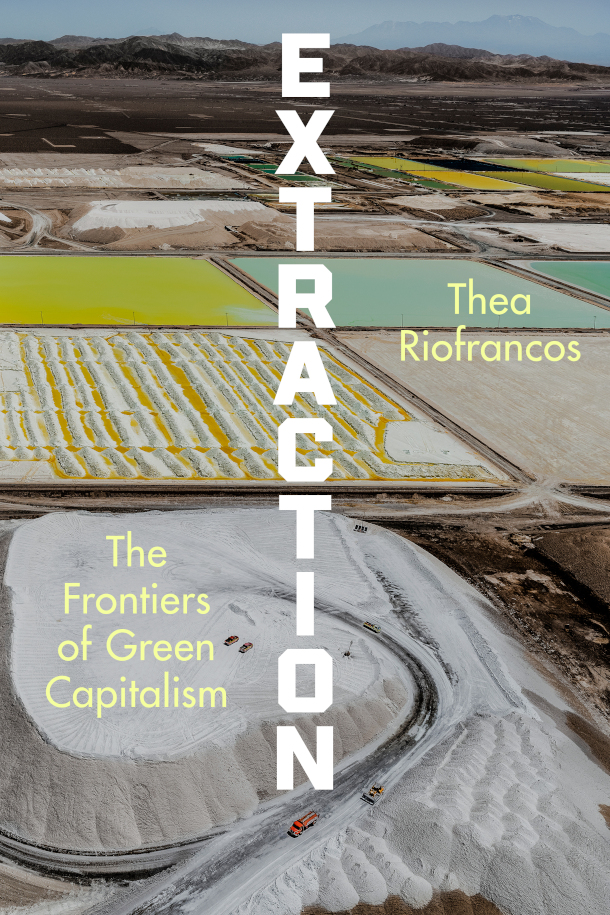
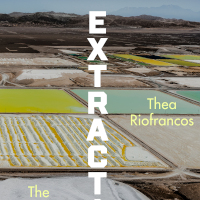
Thea Riofrancos’ latest book, Extraction: The Frontiers of Green Capitalism. (Photo: Courtesy of Thea Riofrancos)
DOERING: It’s Living on Earth, I’m Jenni Doering
BELTRAN: And I’m Paloma Beltran.
Electric vehicle sales are skyrocketing, and in 2025, more than one in five new cars sold globally were electric. But while electrifying transportation is essential to addressing the climate crisis, the mining required to build out these green technologies brings its own environmental and social costs. The batteries that power electric cars are typically made of metals like nickel, copper and lithium. And the intensive extraction of these critical minerals from the earth has left numerous ecosystems and communities with polluted land, water and air. To understand these impacts, author and political scientist Thea Riofrancos traveled to the Atacama Desert in Chile, home to one of the largest lithium reserves in the world. Her latest book is Extraction: The Frontiers of Green Capitalism. Thea, welcome to Living on Earth!
RIOFRANCOS: Thank you so much for having me.
BELTRAN: So, Extraction opens in Salar de Atacama, the largest salt flats in Chile, and one of the driest areas in the world. It barely sees one millimeter of rainfall in an entire year. Please set the scene for us and describe how it feels to visit such a place.
RIOFRANCOS: The reason that I went to the northern desert of Chile, the Salar de Atacama is the salt flat, and the Atacama Desert is the broader region. The reason I went there is because that's where about a fifth of global lithium supplies come from. What I wanted to understand is, what is the local impact of this? What does the landscape look like? How do the communities interface with this? And what I discovered was a place that was, at the same time, impacted by extraction and yet full of life and vibrancy and community. And that salt flat is just amazing. I mean, it is enormous first of all, it is two thirds of the size of the state of Rhode Island. And it's surrounded by beautiful, towering Andean mountains. And then on the salt flat itself, even though it's kind of a strange environment, you know, to maybe someone that hasn't been to one before, it's very crusted with salt, and there are these kind of surface lagoons, and you know, you're high altitude and the sun is really intense. But at the same time, there are flamingos living there. And you know, just 20, 30, 40, miles away are where the mines are on the same salt flat. And so, so much comes together in this place that I think gives us just a different perspective on what it means to organize an energy transition and develop these green technologies.
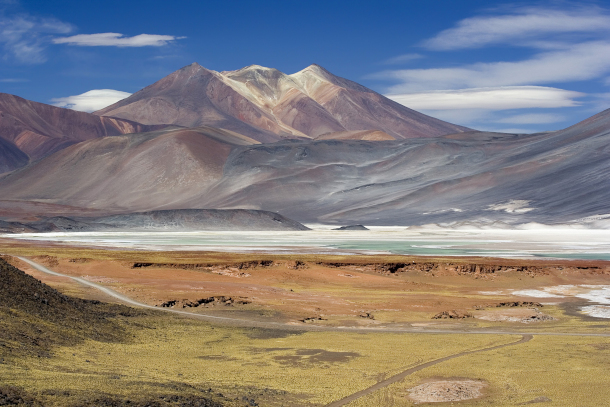
Extraction takes place in Chile’s Atacama Desert, a vast expanse of land west of the Andean mountains, where life thrives despite extremely dry conditions. (Photo: Luca Galuzzi, Wikimedia Commons, CC BY-SA 2.5)
BELTRAN: Yeah. And as you write, it may seem like these salt flats are a vast expanse of nothingness, but they actually house a lot of ecological richness and cultural significance. Tell us about that.
RIOFRANCOS: There's a very common trope that dates to colonialism, that the landscapes of extraction are empty. And from the colonial period to the present, people searching for those resources have said, well, it doesn't matter. Nobody lives here. There's no important communities or life. All there is is the resources, the copper, the oil, the lithium, whatever is of interest. And that is very rarely to never the case, and this is a very good example of that. There are these amazing endemic species, including the Andean Flamingo, this light pastel pink, beautiful bird that touches down on the salt flat during its migratory patterns and eats different snacks from the lagoon. And then around the salt flat, where we begin to have lusher vegetation and also fresh water supplies underground, that's where we have human communities that have developed really amazing forms of agriculture using ancestral Indigenous knowledge developed over thousands of years. And in many ways, it's a testament to the resilience of life, because it's not just the driest desert on Earth and the oldest desert on Earth. It's also very high altitude, very big ranges of temperature, hot during the day, freezing at night. It's just an area in which we can think life has difficulty surviving. But as the saying goes, life always finds a way, and what's amazing is how life persists and flourishes even under conditions of duress.
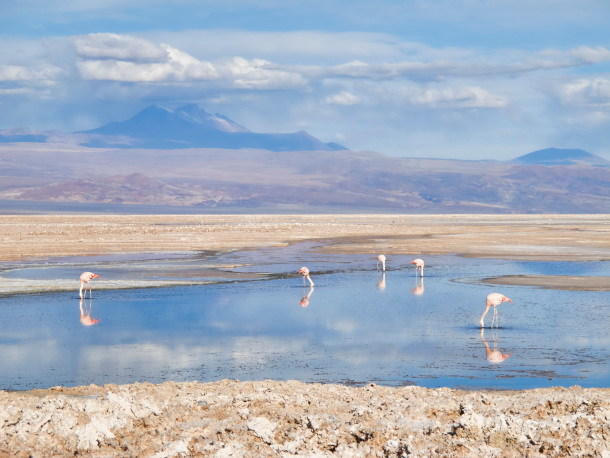
Riofrancos notes that Andean flamingos are one species that have been harmed by intensive lithium mining, especially due to the noise of the machinery. (Photo: Dan Lundberg, Wikimedia Commons, CC BY-SA 2.0)
BELTRAN: So what exactly is lithium, and why does it hold so much global significance?
RIOFRANCOS: I like to call lithium the MVP, like the Most Valuable Player of the energy transition. And there are two main purposes that lithium serves. But all of it relates to lithium batteries. So lithium batteries, you know, the same batteries that we have in our laptops, our cell phones, a similar type of lithium battery is also in electric vehicles, which we know we need to decarbonize our transportation system. And it's worth noting that transportation is the number one source of U.S. carbon emissions, so we definitely need to draw down emissions in that sector. The number two source of U.S. carbon emissions is the power sector, the energy sector, the electric grid. Lithium batteries are now playing a huge role in US energy grids to stabilize renewable energy so that there's always supply when there's demand. And so if we had to choose one technology that we could say shows what the energy transition is about. The lithium battery, key to decarbonizing the two largest sources of U.S. emissions.
BELTRAN: How has lithium extraction in the Atacama Salt Flats led to the exploitation of the land and the people there?
RIOFRANCOS: Yeah, it's been quite concerning, because now we're decades into large scale lithium mining in one of the top lithium providers to the global economy, and we see quite a bit of evidence of both ecological and social harm. The ecological harm relates to some points that we already discussed. Those flamingos that I mentioned, their populations are decreasing in ways that are tightly correlated to the expansion of mining. All of the noise, the roads, the machinery, actually just disrupts the habitat, scares the birds, makes it harder for them to procreate, et cetera. So we have impacts on biodiversity. We also have impacts on water, and this gets a little bit tricky, because in the center of the salt flat, the water is salt water. That's not the water that humans drink. However, when we go to the edge of the salt flat, there is fresh water, fresh water aquifers. And what the scientific evidence is showing is that sucking out all the salt water makes the fresh water harder to access by drawing it towards the middle of the salt flat, away from the human communities that live around the salt flat. And then, you know, until very recently, there had never been a real consultation of the Indigenous people that live there. The first time that such a consultation happened was this past year under the current government, a progressive government. But prior to that, there had never been a consultation about any of this mining, and so communities were left to either protest or just fend for themselves amid all of these major environmental changes that impact their households and livelihoods.
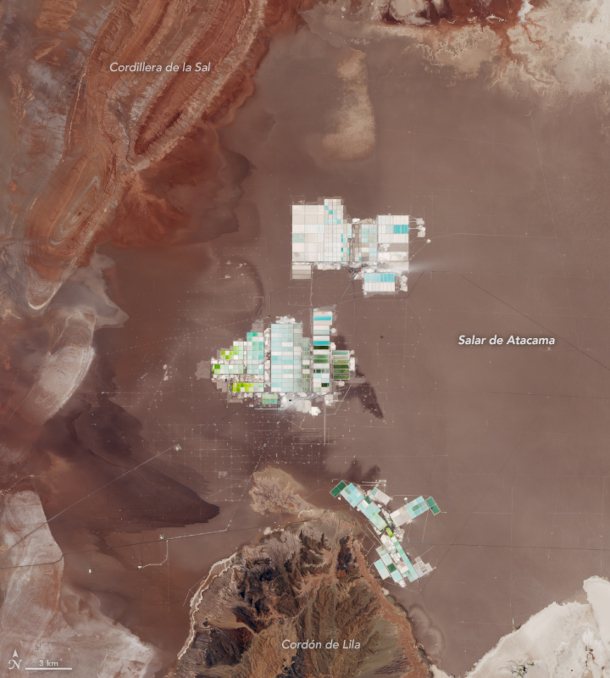
An aerial view of the Salar de Atacama shows the brightly colored evaporation ponds that companies like SQM and Albemarle use to extract lithium from brine. (Photo: NASA Earth Observatory, Wikimedia Commons, Public Domain)
BELTRAN: And who's benefiting from the lithium extraction in Chile? You know, what are the main players here?
RIOFRANCOS: It's a really interesting question, because, you know, there are the mining companies, and I'll get into that in a moment. But then, you know, there is this broader question that I think all of us climate advocates have to grapple with, which is like, what are the costs and benefits of the energy transition, right? Like, is there a way that we, writ large, global humanity, are all benefiting from the Chilean lithium? If so, is it fair that Chile has so much environmental burden as a result of that? And so I think that there are some big questions to ask, but more directed to this issue of the corporations. Right now, there are two major companies extracting lithium in Chile, SQM and Albemarle. SQM is a Chile-based multinational shareholder firm, and Albemarle is a U.S.-based multinational shareholder-owned firm. Both of them operate in other contexts, they have lithium assets elsewhere, but Chile is a really important part of their portfolio, and they have certainly benefited. They've gotten long-term contracts through Chilean lithium, have become key players in the global electric vehicle supply chain. They have, at various points that my book gets into, influenced the government, past governments, sometimes been able to water down regulations, and so they have managed the situation to their benefit. But I do want to say civil society exists, communities exist, and progressive policy makers also exist. And so these companies do not operate in a vacuum. It is a contested terrain in which different voices and viewpoints are battling to figure out what is the best way to govern lithium in Chile and govern these critical minerals in general.
BELTRAN: Throughout your book, you give us a few examples of pushback from local communities to mining projects. What role have local communities played in mitigating the exploitation that often comes with extraction?
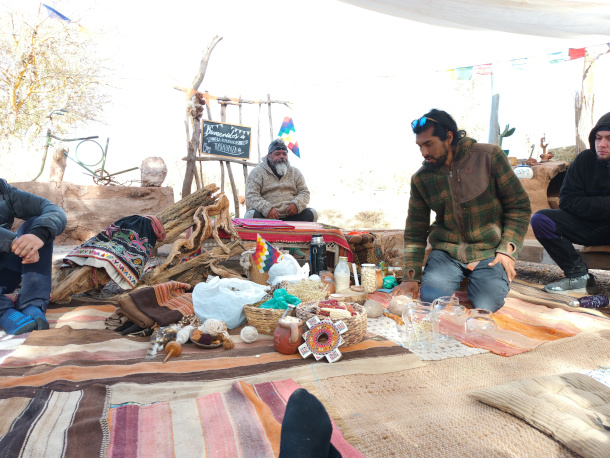
The Atacameño people, or Lickanantay, are an Indigenous group that inhabit the land surrounding the Salar de Atacama. They are known for using terrace agriculture to adapt to the region’s high altitude. (Photo: Ojos de Mar, Wikimedia Commons, CC BY-SA 4.0)
RIOFRANCOS: I'm of the belief that one of the best ways to trigger better governance of mining is to have empowered, engaged and organized communities. It really starts that way, because communities are first of all on the ground. They know their local environment. They may have deep cultural attachments, and they tend to pick up on early signs of environmental threats as well as poor governance. When communities are organized but also excluded, that's when we get more intense forms of protest, sometimes, which then are met with repression or criminalization, quite unfortunately, and even people getting killed. And there's a lot of examples of this, tragically, in the mining sector. The other side to the coin of better governance is the government itself, right, what is the government doing? And there's a range of things that governments can do, from monitoring the environmental impacts to regulation to helping to channel more economic benefits to local communities. But an even bigger type of intervention that a government can make relates to ownership. Ownership gives you leverage, it gives you power. And so it's not for no reason that governments in the Global South, starting many decades ago, in some cases, soon after decolonization, we see governments taking over natural resources saying that the only way that we can have economic sovereignty over our own countries is if we have more control over these strategic resources within our territory. Latin America really stands out as a place where a lot of those types of nationalizations have occurred. This can create different types of tensions with local communities. Sometimes local communities support the nationalization, for sure. Sometimes they feel okay, now instead of fighting a private company, we're fighting the state. But it really comes out of a lineage of a history of foreign control of resources being replaced with more national or state control in the Global South context.
BELTRAN: So electric vehicles are somewhat of the protagonist of the lithium boom, and many people see them as a climate conscious choice. But your book takes into account factors we don't think about when making this decision, such as the environmental and cultural impacts of mining. What do you say to listeners who may be questioning their decision to purchase an electric vehicle?
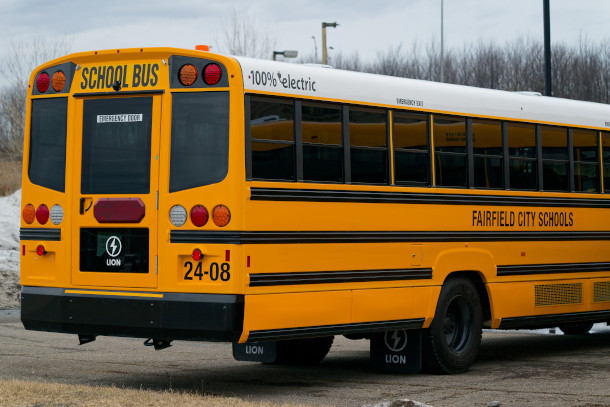
Riofrancos emphasizes that decarbonizing the transportation sector can be done without massive fleets of private electric vehicles. She points to solutions like electric buses, better public transport, and more walkable cities. (Photo: Pierre, Wikimedia Commons, CC BY 4.0)
RIOFRANCOS: The first thing I want to say is that my book is not an argument against electric mobility. It is not me saying that a gas-guzzling car is better than electric car, which is not true. We shouldn't lose sight of the fact that 14 million barrels of oil a day are extracted just for U.S. transportation alone. 14 million barrels of oil a day. So we live in an extractive economy already. It's just that the extraction is for fuel that is burned and creates the climate crisis, versus the extraction being more about mining and the physical building out of a new energy system. So it's important, it's urgent, I should say, to leave the oil and gas and coal in the ground. That said, the environmental harm that comes from lithium mining for electric vehicles is exacerbated by the fact that our imagination of the energy transition is very car dependent. The imaginary is, every household is going to swap in their traditional car for an electric car, and that's how we're solving the climate crisis. That's a huge amount of mining. If, in contrast, we think about other forms of mobility, what if we think about electric busses? What if we think about creating and designing cities in which distances are shorter, people can walk places? And the more that we can embrace a varied toolkit, the more progress we'll make on climate action, and honestly, the more equitable we will be. Because we're in a cost of living crisis right now, the idea that a working class or even middle class person is about to shell out tens of thousands of dollars for a new vehicle when their current vehicle works okay, that's a big proposition. That's a big investment for struggling American households. We're just very hemmed in by the assumption that everything has to be about driving in the U.S., and that's not serving us financially, in terms of the climate crisis, or in terms of the environmental impacts of these supply chains.
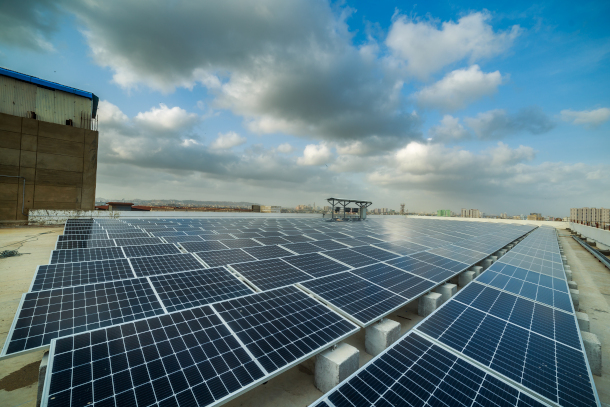
The green energy transition can be an opportunity for increased equity and quality of life in Global South countries, Riofrancos notes. Above, solar panels on a rooftop in Karachi, Pakistan. (Photo: Crosji, Wikimedia Commons, CC BY-SA 4.0)
BELTRAN: So where are we right now in regards to the energy transition and what's the current status of our progress?
RIOFRANCOS: It's such a hard moment to answer that, because in some ways we are, in a devastating sense, not only falling behind where we need to be, but undoing progress we've already made. So we see that with the current Trump government, with the Republicans in Congress. But what I like to reference when I think about this is that the U.S. isn't the world. There are other powers out there. You know, China is economically ascendant. Europe is another important set of economic and political powers. There's Global South countries that are rising up from Brazil to South Africa, so called emerging economies. Last year, Nepal, like 75% of its vehicles were electric in terms of the car sales.
BELTRAN: Wow.
RIOFRANCOS: Solar panels are blanketing every rooftop in Pakistan. You go to Brazil, you go to Mexico, there are conversations about, you know, how can we get this green industry here? And so it's not the case that all these countries are following the U.S. footsteps in terms of like returning or regressing to more fossil fuels. And I don't even think, honestly, that the changes that Trump is implementing are permanent. We still see major growth in solar despite what Trump is doing, because the economics actually cash out very well. So all of this together, it's a complex and contradictory picture. We are still extracting more and more fossil fuels. Emissions are still going up, the temperature scenarios are concerning. On the other hand, we are also globally, making faster progress towards decarbonization of certain sectors than we would have predicted, like a decade ago. So that's how I would frame. It's a hard balance to add up, but the complexity, I think, is better than the sense that we are moving backwards globally. That is not the case.
BELTRAN: And Thea tell us, what do you envision a just energy transition to look like? What do you hope for in the future?
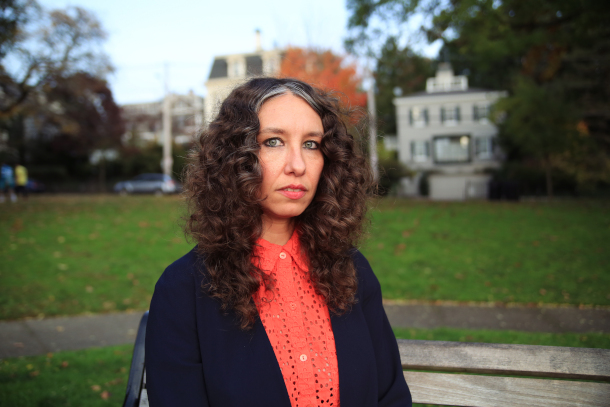
Thea Riofrancos is an author and Associate Professor of Political Science at Providence College. (Photo: Courtesy of Thea Riofrancos)
RIOFRANCOS: There's so much that an energy transition could offer to communities around the world. The question is, what is the long-term vision? Are we moving holistically, where we're thinking about both the need to have an energy transition, but also the need to reduce the environmental impacts of that transition? Can we kind of chew gum and walk at the same time, and think both about building the better future without replicating the harms of the past? Can we think of the energy transition as an opening for more equity in our global economy and political system? Is this a moment where finally, Global South countries that have had the ambition to develop and be more sovereign in their politics can have that chance? Does this provide a set of economic development opportunities for the Global South? There's a lot of potential in there. You know, I think what's tragic is that the world right now is just so conflictual and chaotic that leaders are focused on, you know, attacking one another and dismantling global rules and global governance, rather than moving forward in a multilateral, collaborative way. But that opportunity still exists. I see that, you know, when I see local communities in the U.S. that desire these changes, when I see social movements and climate activists that are fighting for this, when I go to Latin America and there's a lot of enthusiasm about what green development could mean, I think it's important to hold on to that hope so that we can move politics in that direction.
BELTRAN: Thea Riofrancos is an author and Associate Professor of political science at Providence College. Her latest book is Extraction: The Frontiers of Green Capitalism. Thea, thank you so much for joining us.
RIOFRANCOS: It was my pleasure.
Related links:
- Learn more about Thea Riofrancos
- Purchase Extraction: The Frontiers of Green Capitalism and support Living on Earth and independent booksellers
[MUSIC: Stern Blatt, “La Partida” on traditional arranged Inti-illimani, available online at SternBlatt]
DOERING: Just ahead, Celebrating this year’s Goldman Environmental Prize winner for Africa. Stay tuned to Living on Earth!
ANNOUNCER: Support for Living on Earth comes from the estate of Rosamund Stone Zander - celebrated painter, environmentalist, and author of The Art of Possibility – who inspired others to see the profound interconnectedness of all living things, and to act with courage and creativity on behalf of our planet. Support also comes from Sailors for the Sea and Oceana. Helping boaters race clean, sail green and protect the seas they love. More information @sailorsforthesea.org.
[CUTAWAY MUSIC: Jean Atauje, “Zampona Andina-Improvisacion” at Jean Atauje’s website]
Community-Led Wildfire Prevention in Africa
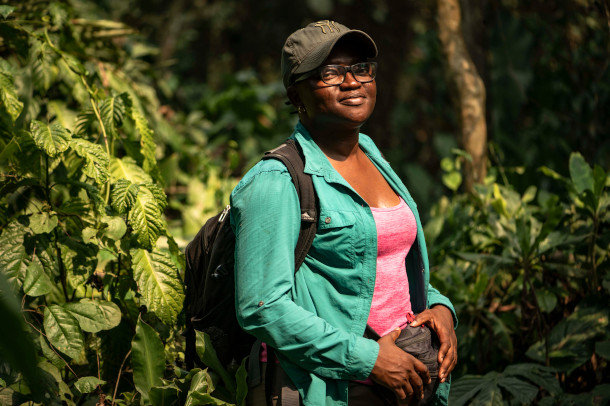
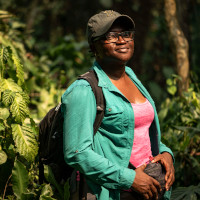
Iroro Tanshi is a Nigerian conservation ecologist and winner of the 2026 Goldman Environmental Prize for Africa. (Photo: Etinosa Yvonne for Goldman Environmental Prize)
BELTRAN: It’s Living on Earth, I’m Paloma Beltran
DOERING: And I’m Jenni Doering.
Nigeria’s Afi Mountain Wildlife Sanctuary is home to many endangered species, like gorillas, rockfowl, and one tiny bat that was believed to be extinct in the region for nearly half a century. Wildlife ecologist Iroro Tanshi rediscovered the short-tailed roundleaf bat back in 2016, but the species is still critically endangered, with habitat loss as one of its top threats. So Iroro joined with local groups to start a community-led program to protect the forest, and her efforts have been recognized with a 2026 Goldman Environmental Prize for Africa. Iroro Tanshi joins me now – welcome to Living on Earth and congratulations!
TANSHI: Thank you very much. I'm very pleased to be here
DOERING: Iroro, when you spotted this roost of short-tailed roundleaf bats, it had been nearly five decades since they were last spotted in Nigeria. How did you feel in that moment?
TANSHI: It was just an absolutely incredible feeling, and because I was in the field by myself with local field assistants. It was kind of hard to translate it to them, so I basically said to them, our lives are about to change. Because they've been talking about how, you know, you have to come back and do more research. And I'll be like, well, I don't have money. I'm just a poor PhD student. But when we found that, I was like, our lives are about to change. We're about to come back to this forest, many, many, many, many times. And I'm actually very pleased to say we have now built a field station at that site, and we're going to keep studying bats and other cool species in that forest, because finding this rare bat just makes this a really, truly special place.
DOERING: Wow. And by the way, these tiny little guys, they're pretty darn cute. What do they look like?
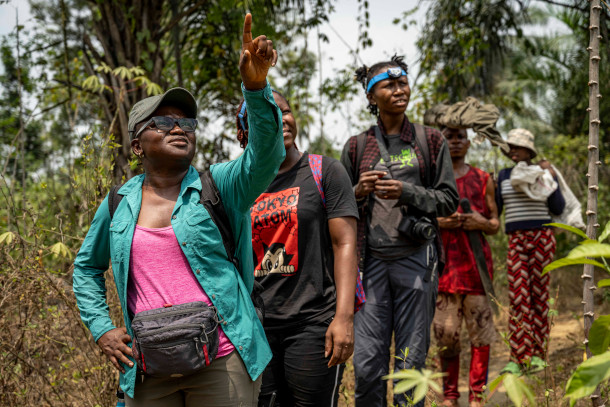
Iroro Tanshi (front) shows her team how to set bat traps in Odukpani, Cross River State, Nigeria. (Photo: Etinosa Yvonne for Goldman Environmental Prize)
TANSHI: That is one of my favorite questions. They look like a golf ball. So if you were going into a cave trying to look for them, they'd just be on a wall. They look like the size of a golf ball. But if they were to start flying, they would look like, you know, about 10 inches wing to wing. And they've got these sort of round point on their nose, so it's kind of like a button, you know, because bats are cuddly too. So if you fed them, they kind of become your friend, in a sense, for that short amount of time you have them. And so it almost feels like you could just, you know, poke them in the nose, you know, like, pop!
DOERING: Boop!
TANSHI: Boop, you know. So they're really cute like that, and they don't really like to be disturbed. So if you have a species that likes open spaces, you don't need to worry about that species. But if you have a species that doesn't like to be disturbed and needs protection for that matter, then what you're dealing with is a species that then saves other species, because that's what this bat's doing. We sort of started working to protect its habitat and, and that just meant we were saving habitat for the bat, but not only the bat, for lots of other species.
DOERING: Now, of course, when you rediscovered these endangered bats, the work didn't stop there. Tell us when your concern for these animals' safety became urgent.
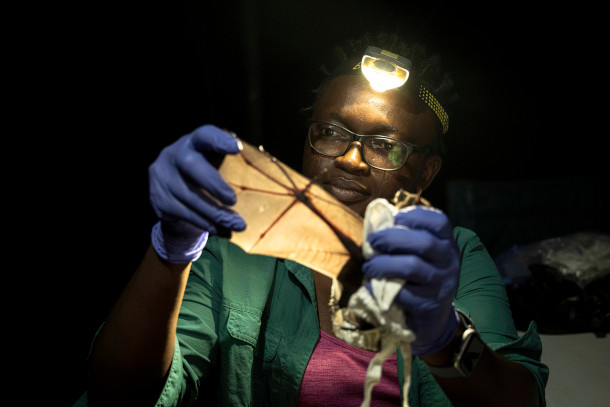
Iroro Tanshi holds up a short-tailed roundleaf bat for data collection. (Photo: Etinosa Yvonne for the Goldman Environmental Prize)
TANSHI: It was a rollercoaster that we experienced. One day we were celebrating the bat that we discovered. Eight days later, we were running for our lives from a wildfire that destroyed 50% of the bat's habitat.
DOERING: Oh, my.
TANSHI: So in terms of urgency, it was an instant moment, just realization that this is it. We gotta do something, you know? Okay, to be honest, when we ran from the forest fire, during that time of running from the forest fire with all of our bags and all of our gear and expensive equipment, my most important concern was to make sure everybody got to the village safe, because we were running down the mountain. It's not safe to be running down the mountain. But then as soon as we got back, when we looked back and took a photo of what the scene looked like, it was a huge conflagration. And in that moment, we knew, we've got to do something, but we thought it was going to be a small fire, you know, a couple of days. No, it burned for three weeks. Three weeks, you look on the map, and you're looking at 50% of the forest gone to fires.
DOERING: Gosh.
TANSHI: So it was an instant situation of just realizing that this is an urgent thing. It wasn't, it didn't take time, you know, we were like, we've got to act now, you know? So we started talking to community members. Initially, there was this sort of aah, no one's going to listen to you. But guess what? These guys, they also want to put out wildfires because it affects their farms too. There were people who were getting thrown into poverty because their whole farm has been burned, their whole family, their whole livelihood is gone. And so that urgency was that exact night when it happened, because we just discovered the species, and we were running for our lives and realizing this huge conflagration was just happening. If we didn't stop it, we won't be able to really speak confidently about any effort to save the species. And that will be a real shame to humanity, losing the species.
DOERING: So you mentioned, you know local people, they also wanted to help stop these wildfires. And fire had been used for a while, for a long time, for burning crops on the farms, but now it's like really getting out of control. What is going on now with fire in these communities and what has changed?
TANSHI: I like the word change. I like that you sort of landed on change, because when we started talking with local communities. They had all the answers. They were like, you know, we have a cultural way of burning, so it doesn't, you know, get out of hand. You know, we burn certain a time of the year. We burn at so and so time of the day, you know, early in the morning and stuff like that. They already had the data in their minds. It wasn't statistically written anywhere. It wasn't due to any kind of measurements that were taken but people had ideas about how to reduce wildfires and how to maintain their cropland with some fire, but safely and stuff like that. So responsible use of fires. But we kind of debated a lot of things during this almost three-hour session, and this elderly woman just stood up at one point and said, you know what all this talk is really because we don't really know the best time to burn anymore. We can no longer predict the best time to burn, if you could just tell us the best time to burn. And we thought, oh, that's interesting. Because without even knowing climate change, she basically said, in her lifetime, the weather patterns have changed. The rainfall patterns have changed. So without knowing climate change, she was describing climate change to us, and that was very touching to me, especially as a very young PhD student who didn't realize that local people have the answers, you know? So all we had to do was to say, beyond the big problem of the fire, how do you break down the different components of it? So they said to us, well, everything's all over the place. So we said, well, that's a problem that technology can fix. We can basically collect data from weather stations and predict when to burn. And that's because, you know, there are systems, especially here in the US, that would rely on weather data and tell people the best time to use a campfire, for example. That we immediately said to our people on the ground in the village and said, Look, we can use this system. And they got on top of it. In fact, it's now part of their local law that if the sign says this is a good day to burn, then that's fine. If it's not a good day to burn, you're not expected to burn, and indeed, you will pay a fine to the local community leadership. And that's kind of where it really all started. We just sort of took it away, was very much a co-managed system, co-designed system. And when I say 'co', I'm really exaggerating how much of an input we were making. We were really just providing a coordination support. They were telling us this is what we need. We need to be able to respond to fires when they happen effectively. Let me tell you how they used to respond to fires. They'll use branches, you know, cut a branch and beat the fire down, or, you know, run with a bucket from, you know, however far away that stream was. So it wasn't very effective. So they're trying to put our fires, they're trying to predict, but it's not quite working. So it was very much a coordination that we did, and they just basically set us up. And that I find to be an incredible story onto itself.
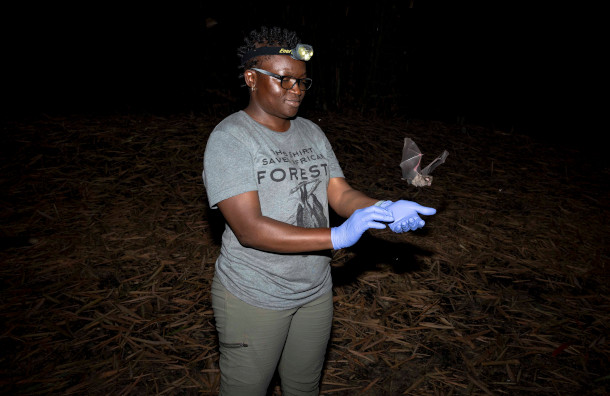
Iroro releasing a bat after data collection in Odukpani, Cross River State. (Photo: Etinosa Yvonne for the Goldman Environmental Prize)
DOERING: And so in addition to the tracking weather and the, I guess, the moisture content of the forest in real time and getting that information to the community, how else did you use technology to help these people prevent and fight wildfires?
TANSHI: Well, I gotta tell you, there's a there's a really nice manual technology. So technology is not always data driven, okay, it's not always like numbers. So there is a backpack that you can fill with water, five gallons, about 20 liters of water, and it's got a high-powered hose connected to it. And that high powered hose you can safely carry that up a mountain or across long distances on the ground in the farms and put out fires when they happen.
DOERING: Wow.
TANSHI: Because remember, these are systems where the water source is a river. Okay? So you have to travel, you know, long distances to get to it, depending on where it is. If you're lucky, you're right next to the river, that's fine. But in most cases, you're not close to a river. So that technology of having a backpack and a high-powered hose, that was an important technology on the response side of this whole system. There's something else that I have to point out, I'm sure your, your listeners will enjoy, is when we make our risk predictions, we let the local people know, and the chief forest guardian will put that sign up on the sign post. But there's also another communication mechanism we use, just in case. You know, they're not able to either go to the sign today. Maybe their farm is in one direction, but the sign is in the other direction. Local communities in this area, in Cross River in Nigeria, they have what's called a town crier, so someone who goes around in the morning, you know, very early in the morning, just before it's bright, at dawn, and they hit a gong very loudly, and they basically, kind of almost wake you up. So if you're in a village at that time, at 6am, you hear a very loud gong that says, you know, hello, hello, everybody. This is a red fire day. Do not use fires on your farm. That is human technology, right there, you know? So when we say technology, some of it's data driven, some of it is just reapplication of, you know, existing tools, as it were, and it always makes a difference, because it's really about solving that problem at a small level, and it builds up to solving this big problem of making sure that fires do not progress from farms to forests.
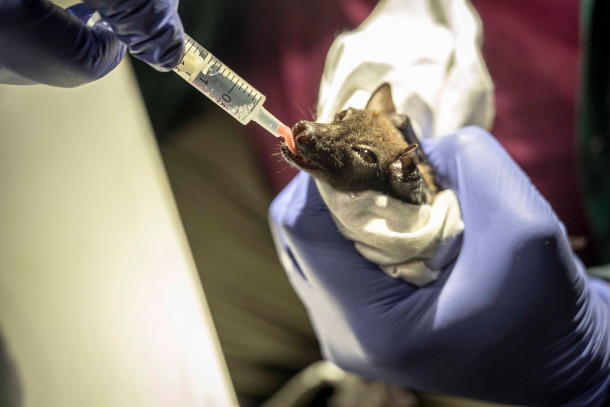
Iroro feeds an Angolan soft-furred bat with a dropper. (Photo: Etinosa Yvonne for the Goldman Environmental Prize)
DOERING: It sounds like the town crier, you know the "hear ye, hear ye", that we've heard about.
TANSHI: Hear ye, yes!
DOERING: And that is technology that works in the local community. That's a human societal technology that is appropriate for a village.
TANSHI: Exactly! A village that does not have cell service.
DOERING: Mmhmm.
TANSHI: Yes, if people don't have cell service, and in fact, you wouldn't believe this, but because it's a mountain range, well, I guess you would, because you're a radio program, you would understand radio waves bounce around a lot in this sort of mountain landscape. So using radio can be quite tricky. And in fact, some of the radio that comes from the city doesn't always get here because they are cut off. So if you're generating radio, it has to be, you know, on the ground there. So in any case, the most effective technique is what the community is already using. And we just got in there and said, well, let's get the town criers to speak. And in fact, it was one of the community people who said, well, we have to get the town criers to tell people. I was like, yeah, I agree, completely.
DOERING: So how successful has this zero-wildfire campaign been and what's the current status of the Afi Mountain Wildlife Sanctuary?
TANSHI: Oh, that's such a great question, because I've got news.
DOERING: Wonderful!
TANSHI: We just closed fire season at Afi Mountain this year, and it's the fifth year in a row when we've had zero wildfires in the forest - zero.
DOERING: Amazing.
TANSHI: That is down from annual fires of, say, five to maybe 30 fires happening in a year in the park. But for the past five years, it's been down to zero, and we've been jubilating. Our teams have been, you know, just excited and everyone's happy in the village. You know, it's like we're all really just pleased to not have to deal with wildfires. So the whole program has suddenly saved Afi Mountain Wildlife Sanctuary from fires. And you can look at the map, you go from 2016 and you know multiple years before that, lots and lots of fire counts within the park to a park where it's completely zero. So the map, we've got this slide show where we show how the fires have sort of dwindled across the years. And it's incredible. It's just incredible. We're really proud of it.
DOERING: And of course, that's good for the people and their farms and homes, and good for the bats.
TANSHI: Absolutely, absolutely. It's great for bats. We're finding more and more individuals of our species, primarily when you're trapping in the forest, but we're also seeing more bat species at this site as well.
DOERING: So Iroro, what do you hope is the future of this system that you've helped to create, and what do you want people to learn from your success?
TANSHI: Oh, I like that so much. First of all, I want to say it's been an incredible effort. You know, across work from our team members, our government partners, our community partners, you know, the community leaders who enforce the law, without any input from us, we just ask them, did you enforce it? Yes? Okay, good. All of those people, this has been the effort of so many people. So I'm really, truly grateful for that, that we sort of created a movement on the ground around one protected area. We started another protected area in Nigeria, so protecting two places from wildfires now. Now on top of that, because we've seen how successful this has been and we've talked with colleagues across Africa, in fact, some places in Southeast Asia, we've got colleagues who would like to test this at our site. And we're like, well, we've got the answers. So we're actually just now launching a program that is pantropical, and it will help people to adopt parts of this program that we've been successful with on their own forest patches around the world. So we're taking this thing global, is what I'm trying to say. So I'm really, I'm incredibly proud of what we've done. I'm incredibly grateful for all the people who've supported us at this point. It's just been an incredible movement. And I want people to get the point that on the one hand, one or two people can make a difference if you push for it, but also local people, especially forest people, they are the custodians. They're the people you want to be talking to. They're the ones who have the solutions. They may not know the exact terms in the modern technology world that we live in today. But come on, you can always translate whatever they say. If they say, we can no longer predict, that's what the problem is. If they say, we just need to know when to burn, that's what the solution is. You know, you've got to go translate that solution to whatever new ways the modern world interprets these things. So it's just incredible that we've been able to do this. And we want people to see that they too in their own ways and their own community can make a difference. Just find your community. Find your village to support you, but find the community people who will take that action with you and just take it away, because the world needs people like that who have a fire in the belly. In our case, our fire was started by fire. There you go. You know who just take it away and rest assured that people will work with you.

Iroro Tanshi at the Goldman Environmental Prize award ceremony. (Photo: Goldman Environmental Prize)
DOERING: Iroro Tanshi is the winner of the 2026 Goldman Environmental Prize for Africa. Thank you so much for joining me, Iroro. It's been a real pleasure.
TANSHI: Thank you. I really enjoyed this conversation.
Related links:
- Iroro Tanshi’s website
- Iroro Tanshi’s profile at The Goldman Environmental Prize
- The Goldman Environmental Prize
- Learn more about the short-tailed roundleaf bat on Wikipedia
[MUSIC: Asake, on NPR’s Tiny Desk Concerts, October 24, 2025]
BELTRAN: Next time on Living on Earth, this year’s North American winner of the Goldman Environmental Prize is fighting a massive proposed copper and gold mine in Bristol Bay, Alaska, home to the world’s largest wild salmon fishery.
HURLEY: Very early on, the vast majority of Bristol Bay's people said no, that no way, this is not worth the risk. You cannot put a price tag on our water and what salmon mean to us as a people.
BELTRAN: Yup’ik organizer and Goldman Prize winner Alannah Hurley, next time on Living on Earth.
[MUSIC: The Folks, “Wild Mountain” Single, Kap Kap]
BELTRAN: Living on Earth is produced by the World Media Foundation. Our crew includes Naomi Arenberg, Sophie Bokor, Swayam Gagneja, Mark Kausch, Mark Seth Lender, Don Lyman, Ashanti Mclean, Nana Mohammed, Aynsley O’Neill, Sophia Pandelidis, Jake Rego, Andrew Skerritt, Bella Smith, Julia Vaz, El Wilson, and Hedy Yang.
DOERING: Tom Tiger engineered our show. Alison Lirish Dean composed our themes. You can hear us anytime at L-O-E dot org, Apple Podcasts and YouTube Music, and like us please, on our Facebook page, Living on Earth. Find us on Instagram, Threads and BlueSky @livingonearth radio. And we always welcome your feedback at comments@loe.org. Steve Curwood is our Executive Producer. I’m Jenni Doering.
BELTRAN: And I’m Paloma Beltran. Thanks for listening!
ANNOUNCER: Funding for Living on Earth comes from you, our listeners, and from the University of Massachusetts, Boston, in association with its School for the Environment, developing the next generation of environmental leaders. And from the Grantham Foundation for the protection of the environment, supporting strategic communications and collaboration in solving the world’s most pressing environmental problems.
ANNOUNCER 2: PRX.
Living on Earth wants to hear from you!
Living on Earth
62 Calef Highway, Suite 212
Lee, NH 03861
Telephone: 617-287-4121
E-mail: comments@loe.org
Newsletter [Click here]
Donate to Living on Earth!
Living on Earth is an independent media program and relies entirely on contributions from listeners and institutions supporting public service. Please donate now to preserve an independent environmental voice.
NewsletterLiving on Earth offers a weekly delivery of the show's rundown to your mailbox. Sign up for our newsletter today!
 Sailors For The Sea: Be the change you want to sea.
 The Grantham Foundation for the Protection of the Environment: Committed to protecting and improving the health of the global environment.
 Contribute to Living on Earth and receive, as our gift to you, an archival print of one of Mark Seth Lender's extraordinary wildlife photographs. Follow the link to see Mark's current collection of photographs.
 Buy a signed copy of Mark Seth Lender's book Smeagull the Seagull & support Living on Earth
© Copyright World Media Foundation. All Rights Reserved
Home | Contact | RSS | Donate | Newsletter