

June 26, 2026
Air Date: June 26, 2026
FULL SHOW
SEGMENTS
Ocean Monitoring Restored
View the page for this story
After announcing at the end of May it was dismantling the Ocean Observatories Initiative, the National Science Foundation faced widespread public criticism and the Senate passed a bipartisan measure to preserve the vital ocean monitoring network. NSF then reversed its decision and says an array that was already being removed will be redeployed. Living on Earth’s Aynsley O’Neill joins Hosts Steve Curwood and Jenni Doering to discuss this reprieve for climate and ocean science. (03:38)
Fighting Fracking in Colombia
View the page for this story
Our sixth and final installment of interviews with the 2026 Goldman Environmental Prize winners features Latin American winner Yuvelis Morales Blanco, honored for fighting against fracking in Colombia. Living on Earth’s Paloma Beltran spoke with Yuvelis about her activism and the death threats she received. The recent presidential elections in Colombia put fracking back on the table, after four years of an administration that signaled a desire to transition away from fossil fuels. (11:16)
When the Forest Breathes with Suzanne Simard
View the page for this story
Forest ecologist Suzanne Simard has shown through her research that the biggest and oldest ‘Mother Trees’ in the forest anchor networks of social connection among the trees, and indeed the whole forest ecosystem. Her latest book is When the Forest Breathes: Renewal and Resilience in the Natural World. Suzanne Simard joined Hosts Steve Curwood and Jenni Doering onstage at the Museum of Science in Boston this April to discuss how more sustainable logging practices incorporating Indigenous knowledge can help heal decades of clearcutting harm. (30:39)
Remembering Environmental Journalist Jim Bruggers
View the page for this story
James Bruggers, who passed away in June, was a champion of environmental justice reporting who helped build the Society of Environmental Journalists with 13 years on its board and another two as its president. As a reporter for Inside Climate News, Jim appeared on Living on Earth over the years, and we remember his inspiring impact. (00:57)
Show Credits and Funders
Show Transcript
260626 Transcript
HOSTS: Steve Curwood, Jenni Doering
GUESTS: Yuvelis Morales Blanco, Suzanne Simard
REPORTERS: Paloma Beltran, Aynsley O’Neill
[THEME]
CURWOOD: From PRX – this is Living On Earth.
[THEME]
CURWOOD: I’m Steve Curwood.
DOERING: And I’m Jenni Doering
A Colombian activist faces death threats for pushing back against oil and gas.
MORALES BLANCO: [SPANISH UNDER VO] I'm a daughter of this river. I'm the daughter of fishermen. For me, defending this very river has been a constant threat running through my life, right? So, when a threat like fracking arises, and the government and state push to frack, I couldn't take my time or delay on deciding whether or not to be involved.
CURWOOD: Also, why we need healthy forests more than ever.
SIMARD: We need to be working with Earth. The ecosystems, the forests, the wetlands, the prairies, have huge capacity to sequester and store carbon dioxide. Some scientists estimate that when we do this, that we can actually draw down CO2 within this century to reasonable levels.
CURWOOD: That and more, this week on Living on Earth, stick around!
[NEWSBREAK MUSIC: Boards Of Canada “Zoetrope” from “In A Beautiful Place Out In The Country” (Warp Records 2000)]
[THEME]
Ocean Monitoring Restored
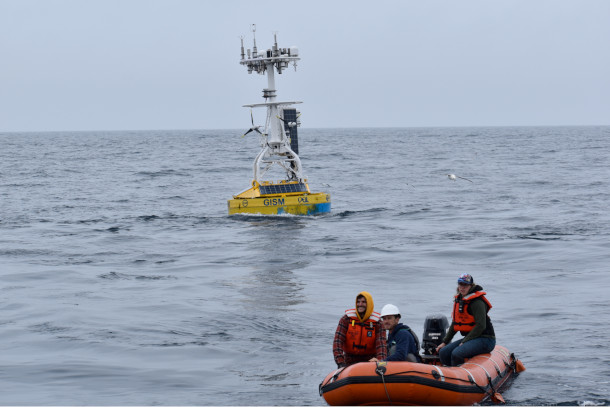
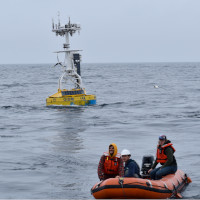
Shown above is a surface buoy in the Irminger Sea, off the coast of Greenland, as the Irminger 8 team heads out to inspect it. Buoys like this contribute to the 900 or so instruments that are part of the Ocean Observatories Initiative. (Photo: Image from work supported by the U.S. National Science Foundation Ocean Observatories Initiative, oceanobservatories.org)
CURWOOD: From PRX and the Jennifer and Ted Stanley Studios at the University of Massachusetts Boston, this is Living on Earth. I’m Steve Curwood.
DOERING: And I’m Jenni Doering.
At the end of May, the National Science Foundation announced it was dismantling the Ocean Observatories Initiative. For more than a decade this project has used roughly 900 instruments on the Atlantic and Pacific oceans to measure currents, temperature, carbon dioxide levels, and more.
CURWOOD: But in the face of widespread public criticism, the NSF recently reversed its decision, saying it would keep keeping tabs on the oceans after all. For more on this, we turn now to Aynsley O’Neill, who’s been following this story for Living on Earth. Hey there!
O’NEILL: Hi Steve, hi Jenni.
DOERING: So, Aynsley, please remind us of what makes Ocean Observatories Initiative so important?
O’NEILL: Well, you mentioned some of the data gathered by the program, that’s used by scientists studying the ocean, but it also helps inform industries like weather forecasting, insurance, and especially fisheries.
CURWOOD: Well, Aynsley, so why get rid of it?
O’NEILL: The NSF said it was a move to improve efficiency, but there was widespread sentiment in both the science and political communities that it was part of efforts by the Trump Administration to limit science on climate change, especially when ocean currents and chemistry can tell us a lot about warming.
CURWOOD: That’s right, Aynsley. I recall our guest at the time the Ocean Observatories Initiative was on the chopping block, a former NOAA official, linked it to NSF’s attempts to shut down NCAR, the National Center for Atmospheric Research. That’s now before the courts, so why did the oceans program get reinstated before any litigation?
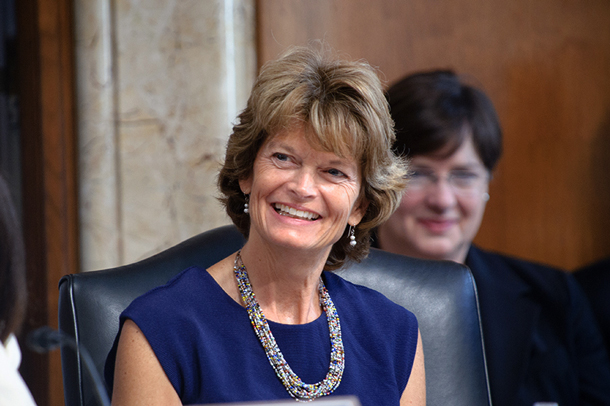
Senator Lisa Murkowski (R-AK) is part of the Senate Oceans Caucus. She is the lead sponsor on the Saving the OOI Act of 2026. (Photo: Committee on Energy and Natural Resources)
O’NEILL: So, there was a massive professional and public outcry, from both scientists and politicians alike. And that led to a rare bipartisan bill to save OOI endorsed by both Republican senators from Alaska, that's Lisa Murkowski and Dan Sullivan, Oregon Democrat Jeff Merkley, and several other Senate Democrats. And end in the end, it passed the senate by a voice vote.
CURWOOD: So, Aynsley, a voice vote with no record made means John Thune, the senate majority leader from South Dakota, must have allowed it. I imagine he’s trying to shield any other Republicans wanting to keep the program from criticism from the Trump White House?
O’NEILL: Well, I didn't quite hear that from any of the guests that I spoke to, but it makes sense, with a voice vote, I think that means that the only Republican senators on record as supporting this would be those two Alaskans, and I mentioned fisheries before, those are obviously huge in the state.
DOERING: Yeah. And there is a senate race this year in Alaska. This is for Republican senator Dan Sullivan. He is behind in polls compared to his Democratic challenger, Mary Peltola.
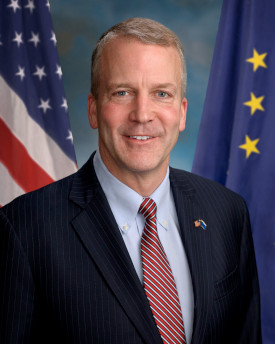
Senator Dan Sullivan (R-AK) is the other Republican co-sponsor of the Saving the OOI Act of 2026. He is running for reelection in the 2026 midterm elections. (Photo: United States Senate, Wikimedia Commons, public domain)
O’NEILL: And one other thing that I heard was that Peltola is really looking to focus on fisheries, so it sounds like Sullivan wouldn't want to give her any points on that. And then of course it would also help John Thune’s quest to hold the majority if Sullivan keeps his seat.
CURWOOD: So, back to the Ocean Observatories Initiative itself, how much of it was dismantled between the original announcement and the NSF walking it back?
O’NEILL: From what I heard, it sounds like the Endurance Array off the coast of Oregon and Washington state was the one aspect which was already in process of being removed from the water. But in a statement, the NSF says that they’re “developing plans to redeploy the equipment after servicing.”
CURWOOD: Well, we’ll want to keep an eye on that and the Alaska senate race as they move forward. Thanks for bringing this to us, Aynsley.
O’NEILL: Thanks, Steve, thanks, Jenni!
DOERING: Yes, thank you.
CURWOOD: That’s Living on Earth’s Aynsley O’Neill.
Related links:
- The Associated Press | “National Science Foundation Reverses Decision to Dismantle Oceans-Monitoring Network After Outcry”
- Read the National Science Foundation’s announcement to maintain the Ocean Observatories Initiative
- Grist | “Outrage Rescued an Important Ocean Research Program. Crucial Ones Remain at Risk.”
[MUSIC: Blue Dot Sessions “La Inglesa”]
Fighting Fracking in Colombia
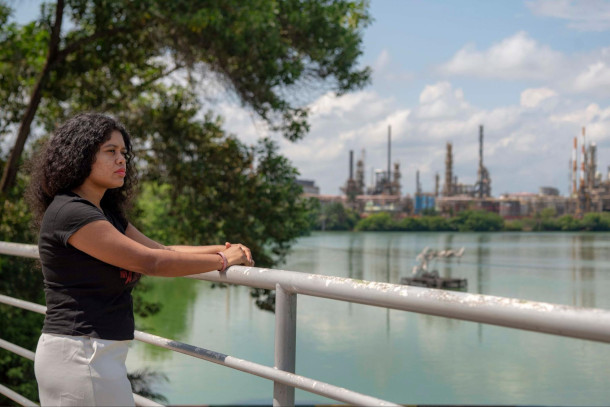
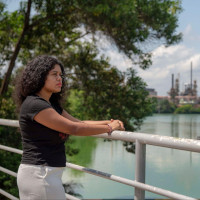
Yuvelis Morales Blanco next to the Miramar Swamp, by Ecopetrol’s main refinery. Ecopetrol’s new fracking project, the Comprehensive Research Pilot Project, is currently on hold. (Photo: Christian EscobarMora for the Goldman Environmental Prize)
CURWOOD: And now we turn to Living on Earth’s Paloma Beltran to talk about the final in our series of six segments on the 2026 winners of the Goldman Environmental Prize.
Hi Paloma, so tell us about this year’s winner from Latin America, honored for fighting against fracking in Colombia.
BELTRAN: Hi Jenni, hi Steve!
So Yuvelis Morales Blanco is from the Afro-Colombian community of Puerto Wilches.
It’s one of the many fishing towns that rely on the Magdalena River which runs nearly 1,000 miles from the Andes to the Caribbean. The region is also home to oil and gas extraction as well as refining. And in 2018, as a teenager Yuvelis saw firsthand the risk of living near this industry when the Magdalena River was polluted by a massive oil spill at the Lizama 158 Well, operated by Colombian national company Ecopetrol.
DOERING: Huh. So, after this oil spill, what led Yuvelis to get involved in pushing back against fracking for oil and gas?
BELTRAN: Yeah, so in 2019 Yuvelis found out that Ecopetrol was pursuing 2 fracking pilot projects in the central Magdalena region where she grew up. She worked with the Colombia Free of Fracking Alliance to raise awareness and stop the potential fracking projects through testimony and peaceful protests. And in 2022, with fracking raised as a national issue and in the face of a presidential fracking ban, Ecopetrol suspended its contracts for the pilot fracking projects. In addition, in 2024 the Colombian Constitutional court ruled that Ecopetrol had violated the rights of the community of Puerto Wilches by denying them free, prior, and informed consent.
CURWOOD: So, it sounds like Yuvelis and her community secured some real, if temporary, wins. And Paloma, I believe you had a chance to talk to her.
BELTRAN: That’s right, and I started off by asking Yuvelis to describe the Magdalena River and where she grew up.
MORALES [WITH VOICEOVER]: Puerto Wilches is located on the banks of the Magdalena River—in the valley of the Magdalena River, to be exact. I always say that we’ve been blessed with a pretty nice spot in the world. We’re part of this valley.
Our day always ends with a beautiful sunset among the mountains, surrounded by lovely people and fishermen, with beautiful shades of orange and purple over the river and the valley.
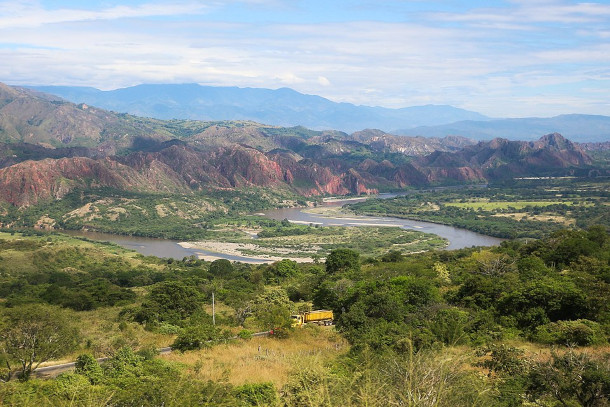
Pictured is the Rio Magdalena in Colombia, along whose banks lies Yuvelis Morales Blanco’s hometown of Puerto Wilches. The Magdalena River is the main waterway of Colombia and is home to a vast abundance of wildlife and biodiversity. (Photo: Bernard Gagnon via Wikimedia Commons CC BY-SA 4.0)
BELTRAN: And what kinds of animals live in that valley? Could you tell us a little more about the wildlife in the area?
MORALES [WITH VOICEOVER]: We’re very tropical here; there are many birds. We wake up with the birds and go to sleep with them as well. There are plenty of fish, and we have an incredible diversity of flora and fauna. We're part of the Jaguar Corridor—this jaguar that roams through Latin America, this great feline. But we also have panthers, monkeys, and marmosets. We have West Indian manatees; they’re part of our wildlife and our cultural identity. We have huge macaws—these large birds. So it really is a wonderful place to live.
BELTRAN: And in 2018, there was a spill at Well 158. How did that spill affect your life? What happened?
MORALES [WITH VOICEOVER]: Well, in 2018, the Lizama 158 oil spill resulted in an environmental and social disaster. The fishing community was one of the hardest hit. This historic spill, which spread over several kilometers, not only affected my life, my family’s life, and the lives of other fishermen, but also the very lives of the flora and fauna that inhabit the Magdalena Medio. We think of the river as an individual that is part of a great chain, and this chain is connected, of course, because at the end of the day, the river is alive—it’s something that flows, that runs through the communities that line its banks. So, when you think about an oil spill—in this case, from Lisama—you have to consider the short-, medium-, and long-term consequences. This means that compensation is sometimes not enough; it’s never enough. It affected me personally. Our family is part of the artisanal fishing community.
So, imagine—we couldn’t fish, we couldn’t sell fish. No one wants to buy fish or seafood when there’s an oil spill. We couldn’t harvest, and we couldn’t plant either, because this oil slick had spread to the riverbank—which is where most of the fishermen have their crops. In other words, this spill was part of a social, economic, and financial situation—however you want to look at it—that was far more significant than the spill itself, including, of course, the damage it caused. Oil spills, including the Lisama 158, mark a turning point in the lives of the communities and the flora and fauna where they occur.
BELTRAN: And more recently, there was a proposed hydraulic fracturing, or fracking project, in Puerto Wilches. How has the threat of fracking impacted your community?
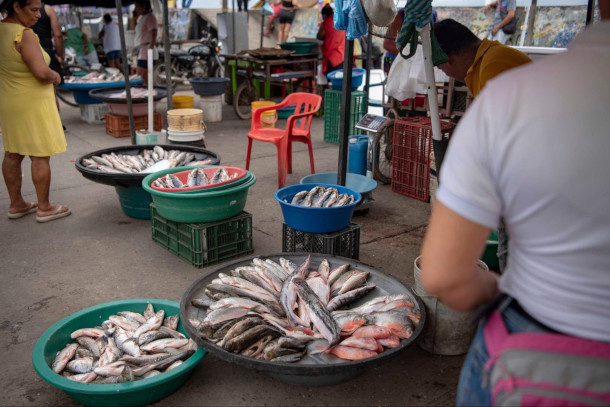
Fish for sale in Puerto Wilches. After the 2018 oil spill, the fishing communities along the Magdalena were among those most severely affected. (Photo: Christian EscobarMora for the Goldman Environmental Prize)
MORALES [WITH VOICEOVER]: Well, we’re fighting to keep fracking out of Colombia, which means fracking hasn’t taken place yet in our municipality. Puerto Wilches remains an anti-fracking zone today, a bastion of anti-fracking resistance. For those of you who don’t know about fracking—let me explain: it’s a fracturing process aimed at extracting the last drops of oil remaining underground. And to make this possible, they inject large quantities of water mixed with many chemicals that are harmful, contaminating underground aquifers, and there’s a high likelihood that they will seep into surface water sources. It arrives in the communities, imposes itself, of course, and then leaves us with environmental disasters, social disasters, and everything that occurs in an extraction chain like that of fracking. That is why we remain, to this day, a municipality and a region that opposes this practice, and for more than 10 years—through the Colombia Free of Fracking Alliance—we have succeeded in stopping this practice in our territory and throughout the country as well.
BELTRAN: Being an environmental activist can be dangerous, especially in Latin America. What kind of resistance did you face when you started protesting against fracking projects?
MORALES [WITH VOICEOVER]: Well, I am a daughter of this river; I am the daughter of fishermen. For me, defending this very river has been a constant thread running through my life. Right? So when a threat like fracking arises—and the government and state push to frack —I couldn’t take my time or delay on deciding whether or not to be involved. Colombia is still the most dangerous country in the world today for exercising social and environmental leadership. Almost every year, we hold the dismal distinction in a Global Witness report as one of the countries where the most environmental leaders are murdered. So it’s quite difficult, especially because we see young people facing this irony that comes with defending life itself. The fact is that in Colombia and the Global South, defending life can cost you your own. It’s a great injustice—a great injustice to current generations, to future generations, and to ourselves. And yet we continue, of course, to defend water and life in our territory. We demand justice; We, the social leaders, demand that the Escazú Agreement, to which several countries, including Colombia, have acceded and ratified—lead to justice and comprehensive protection for all of us, because we not only deserve it, we also need it.
BELTRAN: And Yuvelis, you experienced this danger of being a young environmental activist first hand. You were the target of harassment and intimidation, and those threats to your safety actually led you to relocate to France in 2021. Tell us what it was like to defend your home and your community from a distance.
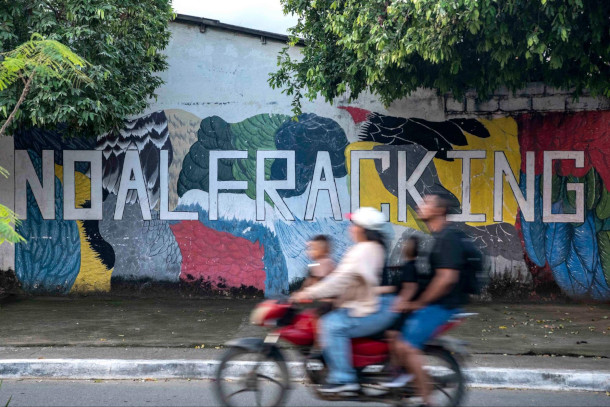
An anti-fracking mural located in Puerto Wilches, which remains an anti-fracking zone due in large part to the advocacy of those like Yuvelis Morales Blanco and the Colombia Free of Fracking Alliance. Puerto Wilches is a bastion of anti-fracking resistance. (Photo: Christian EscobarMora for the Goldman Environmental Prize)
MORALES [WITH VOICEOVER]: It was actually quite beautiful because it was a process of learning about myself, you know? When I arrived in France, I was 21 and feeling pretty down, very lost. I was going through feelings that I think all of us go through when we’re displaced for defending our territory. At first, it was like going into denial, right? About finding sadness in every corner of my heart, too. But then I found the sunrise, it was finding what you’re fighting for, right? Hope in the river, in the mountains, in the sunset, in the people, in myself—searching in those corners of sadness for what made me who I am. Then I learned in France about international territorial defense, about mechanisms of cooperation; I learned about international cooperation itself; I connected with other environmental and social struggles; I met many friends—definitely friends who are family today—I’m sending them a big hug.
BELTRAN: LAUGH
MORALES [WITH VOICEOVER]: In the end, what ended up kind of pushing me aside, making me think it was going to be the end of something, also turned out to be the beginning—discovering myself in other contexts where I hadn’t known myself before.
BELTRAN: And Steve, Jenni – Yuvelis Morales Blanco is now back in Colombia, and continues to fight against oil and gas in her community, newly invigorated from this Goldman Environmental Prize.
DOERING: Wow, well deserved, such courage! After all the threats she faced.
BELTRAN: Absolutely, and it actually looks like fracking may be back on the table.
Colombia recently held presidential elections and the apparent winner, by a razor-thin majority, is the “far-right” candidate Abelardo de la Espriella, the opponent of the candidate from the outgoing president’s party Pacto Historico or Historic Pact.
CURWOOD: So, Paloma what has the president-elect said about fracking?
BELTRAN: Well, Espriella’s party, Defensores de la Patria or Defenders of the Homeland supports fracking as a way to augment energy development and strengthen the country’s economy.
DOERING: So, it sounds like changes may be in store - now what might this mean for the fracking pilots near Yuvelis’ home?
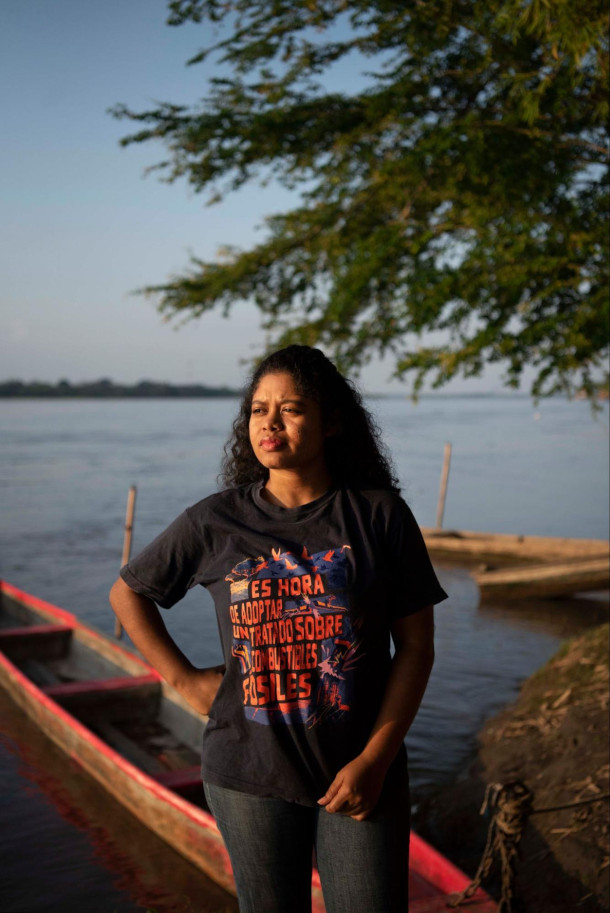
Yuvelis Morales Blanco is this year’s recipient of the Goldman Environmental for her work protecting the Rio Magdalena and her home country of Colombia from the threat of fracking. She is pictured here on the banks of the Rio Magdalena, the river she calls both home and ancestor. (Photo: Christian EscobarMora for the Goldman Environmental Prize)
BELTRAN: After Gustavo Petro’s decision to ban fracking during his presidency, those pilot projects were put on hold, but it now seems president-elect Espriella could reverse that pause. And that would mark a drastic change to Colombia’s efforts in phasing out fossil fuels.
CURWOOD: Right, and just this spring didn’t Colombia host the “first conference on transitioning away from fossil fuels" in Santa Marta, right?
BELTRAN: Yes, that's right, and it was a huge deal! Fifty-seven countries agreed to draft a “roadmap” for phasing out coal oil and gas, and they’re hoping to carry that momentum forward into the UN climate talks this fall.
DOERING: Well, there's a lot to keep track of, and we’ll definitely keep an eye on this -- thank you Paloma!
BELTRAN: No problem!
CURWOOD: Living on Earth’s Paloma Beltran.
Related links:
- Yuvelis Morales Blanco’s profile at The Goldman Environmental Prize
- The Goldman Environmental Prize website
- Inside Climate News | "A Trump Ally’s Rise in Colombia Could Mean the End of Landmark Climate Policies"
[MUSIC: Pueblo Viejo]
DOERING: Just ahead, Mother trees and more. Stay tuned to Living on Earth!
ANNOUNCER: Support for Living on Earth comes from the Waverley Street Foundation, working to cultivate a healing planet with community-led programs for better food, healthy farmlands, and smarter building, energy and businesses.
[CUTAWAY MUSIC: Adolfo Mejía, José Antonio Escobar, “Bambuco en mi” on Guitar Music of Colombia, Naxos]
CURWOOD: It’s Living on Earth, I’m Steve Curwood
DOERING: And I’m Jenni Doering.
In a moment, our conversation with forest ecologist Suzanne Simard about her latest book. But first we wanted to invite you to another Living on Earth Book Club event!
On July 14 at 8 pm Eastern we’ll talk on Zoom with Amy Bowers Cordalis about her book The Water Remembers: My Indigenous Family’s Fight to Save A River and a Way of Life. This Yurok activist and attorney will discuss the struggle to protect the Klamath River in Northern California. Join us for this free, live webinar with Amy Bowers Cordalis on Tuesday, July 14, 8 PM Eastern. Register at loe.org/events! That’s loe.org/events.
[MUSIC: Blue Dot Sessions, “Highway 94”]
When the Forest Breathes with Suzanne Simard
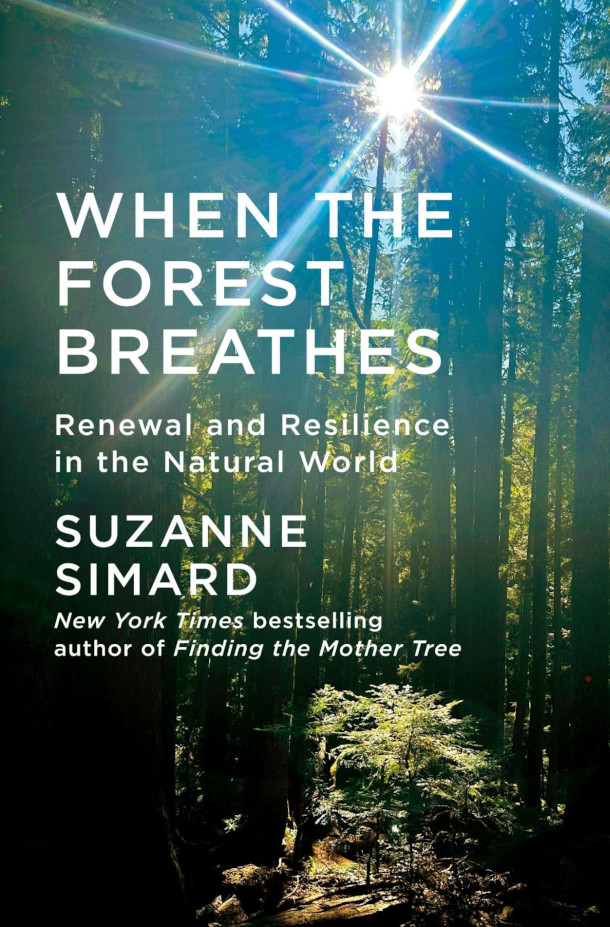
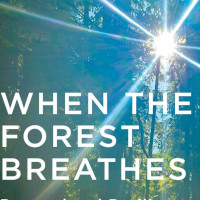
Suzanne Simard is the author of When the Forest Breathes: Renewal and Resilience in the Natural World. (Photo: Courtesy of Penguin Random House)
CURWOOD: Right now, we want to invite you to listen to an event we held on April 6, 2026, when a live audience came to the atrium of the Museum of Science in Boston for an evening with Jenni and myself, and with world famous forestry scientist, Suzanne Simard.
DOERING: You might remember that name from a few years back when she wrote the New York Times bestselling book Finding the Mother Tree: Discovering the Wisdom of the Forest and talked with us then.
CURWOOD: She spoke and wrote about her research showing that the biggest and oldest trees in the forest anchor networks of social connection among the trees, and indeed the whole forest ecosystem. It was a breakthrough and not without some controversy to regard trees as having some kind of collective consciousness.
DOERING: And now Suzanne Simard is back with her latest book, When the Forest Breathes: Renewal and Resilience in the Natural World, based in part on her latest research with colleagues including Indigenous communities, that is further documenting how older trees nurture younger saplings.
CURWOOD: She is a professor of forest ecology at the University of British Columbia and works in B.C.’s towering forests, where logging has cut down all but 3 percent of the original old growth trees.
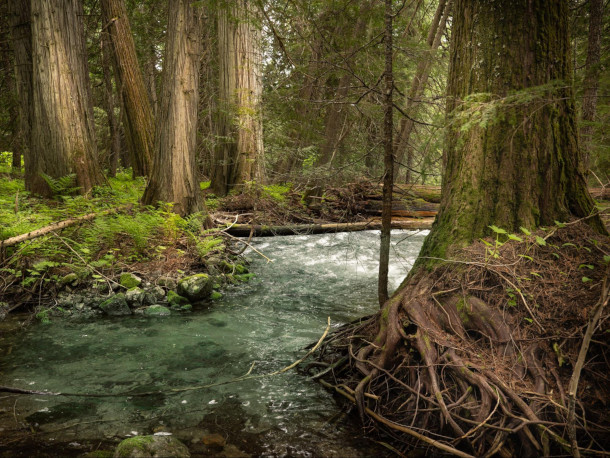
Within old growth forests, Simard has found the biggest trees are the most highly connected by mycelial. (Photo: Courtesy of Bill Heath)
DOERING: And she is intent on saving what’s left and developing more sustainable logging methods to allow old ‘Mother Trees’ to thrive in those forests, not only helping trees, but also the rest of us.
CURWOOD: So, let’s turn now to our evening with Suzanne Simard on stage at the Boston Museum of Science.
DOERING: So Suzanne, what is a mother tree, and why did you give them that name?
SIMARD: So, what we did in this research, looking at connection in the forest, is we mapped what are called mycorrhizal networks. These are mycelial networks that live below ground. They're formed by a mycorrhizal fungus, or many mycorrhizal fungi, which are a symbiotic obligate relationship with trees, and actually most plants in the world need these relationships. And these fungi gather food from the trees. In exchange, in this symbiosis, they provide nutrients and water that they gather from the soil, and it turns out that some of these mycelium will connect trees together. And so, we mapped what these mycelial or mycorrhizal networks — I use those things interchangeably. When we mapped them in the soil, what emerged from the map was that the biggest trees were the most highly connected. And so then we started doing a lot of experiments around these old trees and found out that the mycelial network was essential in the regeneration of the trees that were coming up in these old growth forests, that the young seedlings were tapping into these networks and benefiting from it by getting basically food and water and nutrients from the big trees. So because of it, their size, their age, their regenerative process of these old trees, we started calling them mother trees.
CURWOOD: So, Suzanne, what drew you to study forests and mother trees? I mean, how did you get into this work?
SIMARD: Well, it came naturally because I grew up in these old forests. When I was a kid, I just followed my grandfather and grandmother and uncles and aunts through the forest. And they were horse loggers, actually, so they made their living from the forest, selectively harvesting small trees from these old growth forests, and so that's all I knew. And then I became a forester, eventually, because as a girl you can't really be a logger yourself, at least you couldn't in the 1960s, so I had to find another way in. So I became a forester, and I had to unlearn what my grandparents had told me, and so I made it my life's work really to try to demonstrate what I understood as a visceral ancestral person, that these forests are really connected places, and that's why I did the work I did is to really demonstrate connection.
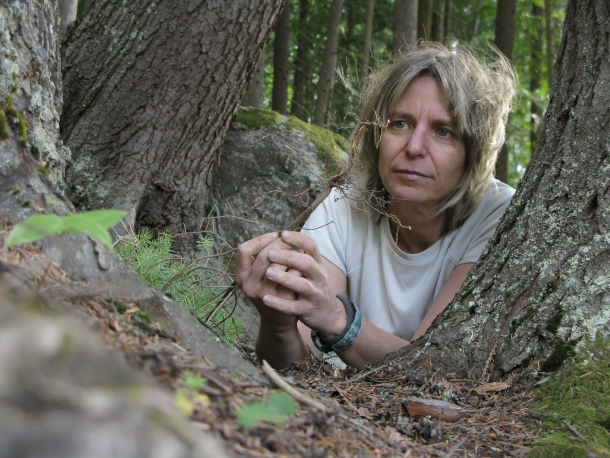
As a young forester, Simard was inspired to research mother trees when she noticed that the seedlings planted after a clearcut were often sickly. (Photo: Courtesy of Bill Heath)
CURWOOD: You said unlearn.
SIMARD: Yeah, so in forestry school, as in a lot of resource management schools, the training back then was... in the colleges and universities... most of the people that did that were from Europe, and not that there's anything wrong with Europeans, but they didn't understand forests and ecosystems very well, you know. They came over and colonized North America, and then taught from their perspective of what they'd done in Europe, and that didn't match up with the natural ecosystems of Canada or Western Canada, where I was from. What I learned from them was that you need to get rid of the old growth forests and convert them to what they called normal forests. A normal forest means that it follows a bell-shaped curve, a normal distribution, if you've had any background in science, which means it's very predictable, follows like a mean, an average tree size, average tree species. There's not a lot of diversity.
DOERING: It's very precise, sounds like.
SIMARD: Precise, and yet too simple.
DOERING: Yeah.
CURWOOD: And they cut down all their trees, by the way.
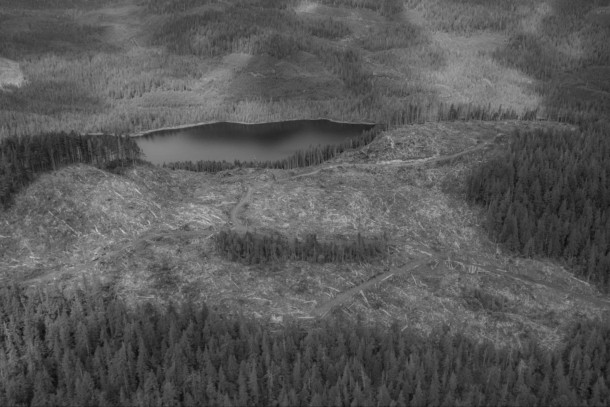
The commodification of trees has made clearcutting a standard practice where homogeneous trees are grown so it's easy to point out which trees need to be cut down, eliminating diversity and conservation (Photo: Courtesy of Bill Heath)
SIMARD: Well, yeah, that's true. And now they've spent a long time trying to get the trees back. And here we are in North America, we're doing the same thing, but we don't have to, right? We don't have to go there, and that is part of the issue here, is to protect what we have left.
DOERING: And this gets at the heart of a lot of the research that you talk about in this book, the Mother Tree Research Project. I think you had six or seven different logging treatments. You had outright clear cutting all the way down to taking just a small percent of trees, and you had a control group as well, with no logging, and I think you had a gradient of different climates, dry to wet, across British Columbia. How well does that describe your research?
SIMARD: Thank you for doing that. That's great. So, clear cutting is the standard practice in Canada. I don't know about the United States, but probably, in fact most forests around the world, it is the standard practice now, because basically the economists now are running the forest right, and that means that they're trying to make it predictable and profitable, and the profit driven way is to clear cut, which is to take everything. That's not really good for the ecosystem, it turns out. So, that design that you described, of leaving mother trees in different densities and configurations, was to try to find alternatives to that clear cutting way. And what we're finding out is that you actually need these old trees left behind in order to protect the ecosystem. The old trees, it turns out, do provide seed for regeneration. They do provide shelter for the new ones coming up. They do provide mycorrhizal networks that the little ones can tap into to get sustenance from Mother Earth. They do provide homes for bears and birds. So, what we're finding is that when we leave these old trees behind, and the more we leave behind, the more we're able to protect the integrity of those ecosystems.
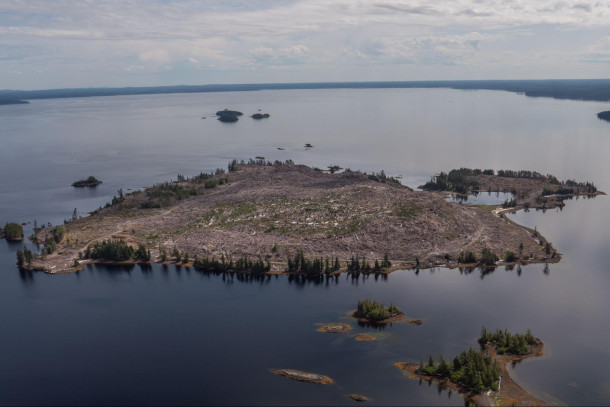
Forests are major carbon sinks, helping to slow the greenhouse effect caused by greenhouse gas emissions. With clearcutting, 70% of carbon within an ecosystem is emitted into the atmosphere, Simard says. (Photo: Courtesy of Bill Heath)
DOERING: When you presented these findings to foresters, I think they were shocked by what had happened to the forest floor. You saw something like a 60% loss in carbon in the forest floor in these clear cuts. What is going on there? Why is there so much of this carbon that's being lost, and so much that even the foresters themselves were like, "Oh no, there's something wrong here."?
SIMARD: Yeah, so I'll just set the stage for how important this is, for a second. So, just when you think about, we've got this climate that's not very stable right now, and part of the reason is because there's too much carbon dioxide and other greenhouse gasses in the atmosphere. Those gasses come from fossil fuel burning, cement production, and also land use change. Climate scientists figured that about 20% of greenhouse gasses come from land use change. My research suggests that's an underestimation of the contribution of what land use changes. What is that? That means the conversion of the prairie to agriculture, it means clear cut logging, and also conversion of wetlands and other uses of land. It's probably quite a bit more, and so this research you just explained is part of that picture. So, in a forest, in a temperate forest, what we're finding, at least in the western temperate forests, is 50% of the carbon in a forest is in the ground, underground, and 50% is what you see above ground. Okay, so being a carbon sink for CO2, forests are really important for balancing climate, balancing greenhouse gasses. When you cut down a forest and clear cut it, that whole 50% that was above ground is basically emitted to the atmosphere. The shocking thing is that with clear cutting we are also losing 60% of what's in the forest floor, which is where half of the below ground carbon is. So that means that we're actually emitting, when you add it all up, about 70% of carbon in an ecosystem into the atmosphere. Now, some will argue, well, some of it goes into long-term storage products like furniture and so on, but it's only a small percent. When you clear cut a forest, only 25% of it ends up in a forest product, and most of that is paper and cardboard, so most of it evaporates within the year of harvesting. So this is a really big deal. It's a really big deal, and to that forest floor took, you know, 10,000 years, in the case of Canada, to develop, and we're erasing it in an instant. So this was shocking. It's even shocking to foresters, but there is a good news part to the story, which we can get into maybe a little bit down the road.
CURWOOD: Well, we'll take good news anytime, actually. That number that the tree gets all right, so the tree, maybe even an old growth tree, is two or three or 400 years old, but the forest floor, you're saying that's a 10,000 year process, really, since the last ice age, that's been building up. And so when we clear cut, we are putting that into the carbon flux. We're putting that into climate disruption.
SIMARD: It's shocking, isn't it? Yes, and we don't have to, that's the thing. If you leave the trees, and if you don't put big machines on the ground... so the machines that go in and cut a forest down, they're huge. They're like whales, right? They're as big as a whale. They move the forest floor around. And the industrial method of clear cutting, you pull that whole tree out of the forest into a pile, cut off the limbs, buck it up, and put it on a logging truck, but the vast majority ends up in these piles that are as tall as the ceiling, and they get burned, and so they're emitted to the atmosphere, so you're losing that forest floor to this process of whole tree logging big machines on the ground, and it took 10,000 years to develop, and we need to do better than that, right? Because it's squandering what life has given us on this earth.
CURWOOD: Yeah, and so I'm waiting for the good news.
SIMARD: So, the good news is... there's always some good news. So, I have this big crew of students in the Mother Tree Project, you know, there's probably a couple dozen that come out every year, and we measure everything. And so we went back three years after this logging to figure out what had happened to the forest floor. And my hypothesis was that if we clear cut and get rid of all the plants, that it will continue to dwindle away. It will erode away, evaporate, and really diminish the forest floor, and we have plenty of evidence for that around British Columbia. If you take away the plants, like if you continue to, you know, not look after the ecosystem, it continues to disappear. But what we found is that when we left the mother trees, and when we let the plants grow back, right, we didn't use any herbicides or anything like we just let them flourish, and they grew back to as being taller than me. And that forest floor went from on the coastal ecosystems, and I'll just give you the raw numbers, from 70 tons per hectare in the forest floor, clear cutting reduced it to 20 in two years, it grew back to 40. That is amazing. What is that? That is the plant and animal and soil world doing its thing as long as we do the right thing by it.
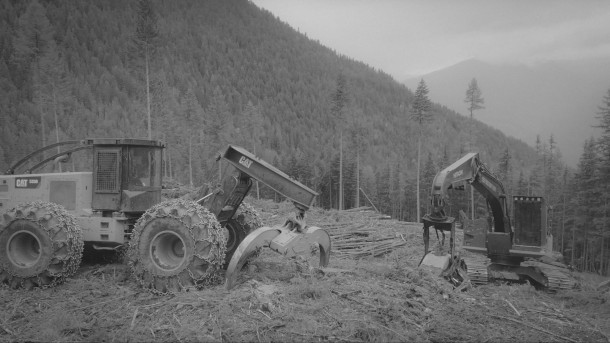
Within the industrial process of clearing a forest, large heavy machines uproot entire trees and cut off their limbs to be placed on logging trucks. The remaining piles are typically stacked up and burned, releasing additional carbon into the atmosphere. (Photo: Courtesy of Bill Heath)
DOERING: And when it comes to that heavy logging equipment, what is practical and feasible in terms of taking trees out in a way that doesn't destroy the forest floor?
SIMARD: Well, again, this is another beautiful thing about this. I think that we should de-mechanize forestry, which means we don't need those big machines. What we need are people in the forest doing this work, right, like what we used to do, and it might sound backward, but it's actually forward, because when people are out there doing it, they're making good decisions on the ground, like a craftsperson. They're deciding which trees can be taken, which ones to leave behind. They're treading softly. They're engaging with Mother Earth. They're watching and monitoring, which is what indigenous people have always done on Mother Earth, and really looked after her. That's what we need to do, is we really need to take the care, as human beings, of Mother Earth, so that she can provide for us too.
[MUSIC: Woodland Cathedral]
CURWOOD: We’ve been speaking with forest ecologist Suzanne Simard about her book When the Forest Breathes in front of a live audience at the Boston Museum of Science. Don’t go away, we’ll have much more right after this short break. Keep listening to Living on Earth!
ANNOUNCER: Support for Living on Earth comes from the estate of Rosamund Stone Zander - celebrated painter, environmentalist, and author of The Art of Possibility – who inspired others to see the profound interconnectedness of all living things, and to act with courage and creativity on behalf of our planet. Support also comes from Sailors for the Sea and Oceana. Helping boaters race clean, sail green and protect the seas they love. More information @sailorsforthesea.org.
[CUTAWAY MUSIC: Don Ross, “Berkley Springs” on Passion Sessions, Narada Productions, Inc.]
DOERING: It’s Living on Earth, I’m Jenni Doering
CURWOOD: And I’m Steve Curwood.
Let’s go back now to our conversation with Suzanne Simard in front of an audience at the Boston Museum of Science. She is a professor of forest ecology at the University of British Columbia and author of the book When the Forest Breathes: Renewal and Resilience in the Natural World.
DOERING: The planet right now is really suffering under what some call a fever climate crisis. It's an existential crisis, many would say. So, what's the link here? Remind us why it's so important to be talking about forests and thinking about what we're doing in forests when we think about solving the climate crisis. It's not just EVs and green technology.
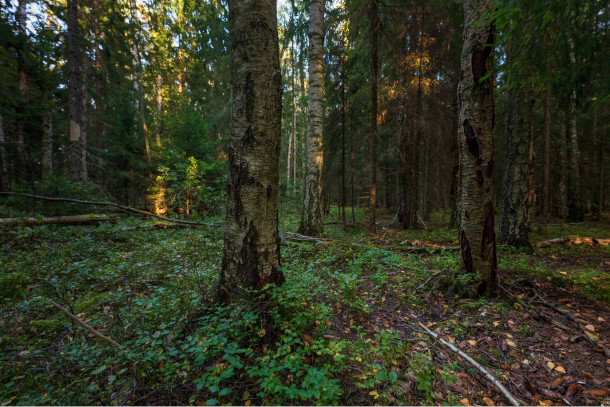
Allowing some old-growth trees to remain standing, instead of clearcutting every last tree, can help forests flourish, even when providing timber for harvest. (Photo: Ximonic, Wikimedia Commons, CC BY-SA 4.0)
SIMARD: Yeah, so definitely we need to look after moving our energy sector to renewables, but at the same time we need to be working with Earth. The ecosystems, the forests, the wetlands, the prairies have huge capacity to sequester and store carbon dioxide. And in fact some scientists estimate that when we do this, that we can actually draw down CO2 within the century to reasonable levels, so we got to be working on the reduced emission side, but we also got to be working on the increasing the sink side. And what my research shows is that we can do this, that there is incredible regenerative capacity in the forests, in all ecosystems. They're wired to do this. As long as we are good stewards, and we leave the seeds and the spores and the trees and the soil in good health, that Mother Earth will come back. With that recovery of the forest floor so quickly, that was to me was like, oh yeah, oh yeah, she's ready to do this. In restoring these forests, which are globally, we think that up there about 70% of them are underperforming or are damaged in some way, that if we restore them, do the work, then we can really have a big impact on greenhouse gasses.
CURWOOD: So, the math you're talking about here basically you suggest that 30% let's say, of the carbon flux comes from these poor forest practice. But how can your approach to sustainable forestry help us deal with another part of the, or I guess it's closely related, but another view of the climate emergency, which is this rash of wildfires? It seems that this is much going into the atmosphere now every year from wildfires as from the cars and trucks that are running around the planet. If it's a huge flux, what's the answer here?
SIMARD: Yeah, these are really important questions. So we have all this energy in the atmosphere from global warming, there's more lightning, and also there's more fuel, because we banned indigenous burning in North America over 100 years ago. And indigenous people that were burning the forest for millennia, millennia for various reasons, to reduce fuel loads, to increase food production and medicine production, to improve habitat for wildlife, to create trade corridors. All these reasons, and when colonialism happened, we just said, "Oh no, we're taking over from here. We're going to ban indigenous burning. We're going to keep these beautiful ecosystems as they are and exploit them for various products." And that disrupted the entire system. So we need to restore the health of these ecosystems that evolved with people over 1000s of years with burning. We have to restore those natural processes, so that they're healthy again. And how do we do that? That is a really good question because we've created a perfect storm. We've got more lightning. We've got more heat in the atmosphere. We're pumping more out all the time. We've got these forests that are loaded with fuels. We really need to get to work in these ecosystems and start to restore their health, and that is not an easy thing to do. It has to be done very carefully, and it needs to be done with knowledge, you know, knowledge that has been accumulating over 1000s of years. So that means working with the first people, and really, you know, working with people in the forest, doing this work one little bit at a time.
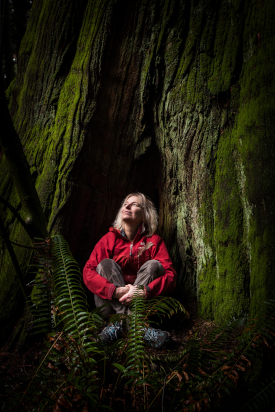
Suzanne Simard is also the author of Finding the Mother Tree: Discovering the Wisdom of the Forest. (Photo: Courtesy of Diana Markosian)
DOERING: You, of course, in this book, you describe several different indigenous communities that you visit, their forests, their forest gardens, because, of course, as you mentioned, the forest is a place of food production for them and has been for millennia. So, how did those relationships that you built with indigenous communities throughout the Mother Tree Project and other means, how did they change your relationship and your understanding of the forest?
SIMARD: Yeah, that's a really good question. So I was doing this work on connection and forest for decades, writing and speaking about it, and the nations, some chiefs started coming to me and said, can we work together, because you see the forest the way we do. We want to work together, so that we can help recover and restore our forests. And so I've just been working with them for over 10 years now. And I'll give you one example of one of the discoveries that we made working together. I was working with Chief Rande Cook. He's a hereditary chief of the Ma'amtagila Nation. That particular nation is actually not recognized by Canada as a nation, so they're fighting for their rights and title and sovereignty, and so me doing science with him is really can be helpful, because the evidence that we provide about the cultural importance of forests, the intertwining of culture and ecosystem ecology, can stand up in the court of law. So one of the things that we did is we went deep into his territory, and we were going into an ancient forest that he called his Sister Cedar Society. And we actually canoed with a bunch of youth over to this forest. And when we went there, one of the speakers... Just to give you a sense of what it was like, we canoed up with a whole bunch of teenagers, and we were going to go into these sister cedars. And Matthew sang to the forest to ask permission to go into the forest, and he sang and drummed this beautiful song in his language. It was so moving, and we waited, and the forest gave us permission, and so we all went in, along this trail. The teenagers were having so much fun, and we finally got to the sister cedars, and these trees were 4000 years old, and all around the sister cedars that were huge were all these generations of young cedars that had come up. The sister cedars had all died. They'd passed on, so when we stood there, Rande said to all of us, he said, "Now I want you to listen, I want you to really listen. These are the sister cedars, and our spirits are in these trees. This is our spiritual connection." And so all the kids went dead quiet, and they started talking about how trees communicate with us and with each other. And out of that moment with the kids and the chief, we came up with a research project where we are investigating communication between sister cedars with each other and with the other species around them, the maple trees and the yew trees. Okay, so this is really cool. What we found is that all these trees are connected by these underground networks, and they're in conversation. They're sharing carbon with each other. They know exactly who the neighbors are, whether it's a hemlock, a fir, a maple, a yew tree. The yew tree, in particular, is the medicine tree, so it's a tree that has been long used by indigenous people for all kinds of medicines, particularly in our Western culture, we use it for fighting cancer. It produces Paclitaxel. So, the one thing that we found was that the big trees would share carbon with the yew tree, and it changed the yew tree, and so our theory is that it changed the medicine. Now, when we make medicine in the lab, we're taking cell lines and working with one, maybe one cell from one tree. But could you imagine if we actually worked with the ecosystem, how those medicines might change? I think they would be far more powerful.
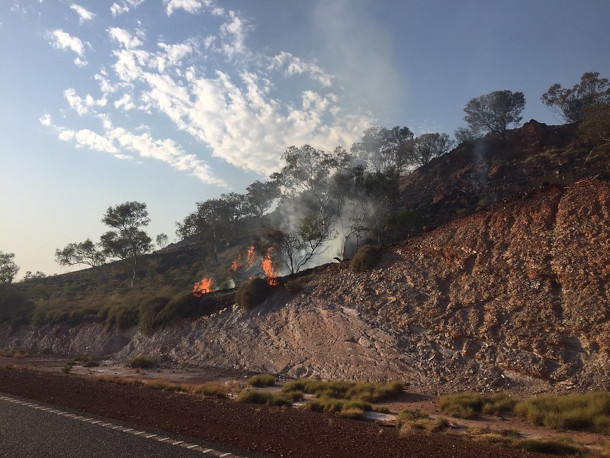
Cultural burning is a traditional practice in many Indigenous cultures. It can often lead to increased ecosystem health, and subsequently increased food and medicine production. (Photo: Brian Ireland, Flickr, CC BY-SA 2.0)
CURWOOD: Okay. Well, you're taking us deep here, huh? Can I dare ask this question? I'm gonna. Are these trees conscious? Or what level of consciousness do they have?
SIMARD: Everybody likes to ask that question.
CURWOOD: Yeah.
SIMARD: Well, you know, they have their own consciousness. Consciousness is a word that we use for human beings, so it already gets a challenging question because it's our language, and so we're trying to put our language on these plants, but they're making decisions all the time. They're making decisions on whether to grow over here, to send a message over there, to detect a tree over here. If that's not consciousness, I don't know what is. We get in trouble by using human words for a phenomenon that is extraordinary.
DOERING: We’re speaking with Suzanne Simard, author of When the Forest Breathes and founder of The Mother Tree Project. And one of the remarkable displays of the interconnectedness of life in the forest, especially in the Pacific Northwest, is how salmon fertilize the forests, helped by Indigenous people. Tell us about that relationship please.
SIMARD: It's actually a really a great story of stewardship about this reciprocal relationship between people and ecosystems. So, along the West Coast of North America, I think there were six or seven species of salmon. They were vastly abundant before Europeans came. And one of the reasons they were so abundant was because of the stewardship practices. And so, along the coast, a lot of these nations would build what are called tidal stone traps, and the way that worked is that along the estuaries, where the estuaries were, where the salmon would go up to spawn, they would build these long arcs of stone walls. And these stone walls would be like as tall as me, couple meters tall, or six feet tall. I'm not six feet, but, so, the way it worked was that during spawning season, the people would have had their smoke houses along the shoreline, the tide would come in, and then they would let all the salmon go out and out to the ocean, if they were doing that, or going upstream to spawn. And on the ebb tide, the low tide, then they would pick up the small fish to harvest, and then they would smoke them. And they, you know, along the shoreline, they also had all kinds of other food systems, by the way, root gardens, clam beds, huge food systems. And so anyway, in this process of how they fish, this passive technology, they would let the big mothers and fathers go upstream to spawn and fertilize the eggs, and big fish create bigger fish, and at the same time, at the tidal stone traps, they could count the fish, so they knew, you know, what the abundance of the of the populations were, and if it was low, then they wouldn't take any fish, so in a way they were really keeping track. So these big fish would go up to spawn, and when you go into these forests in spawning season, like when you're walking on the forest floor, it is covered with salmon, because the bears and the eagles and the people are taking the salmon into the forest. I mean, you can't walk more than six feet without stepping on a salmon carcass, because there's that much there.
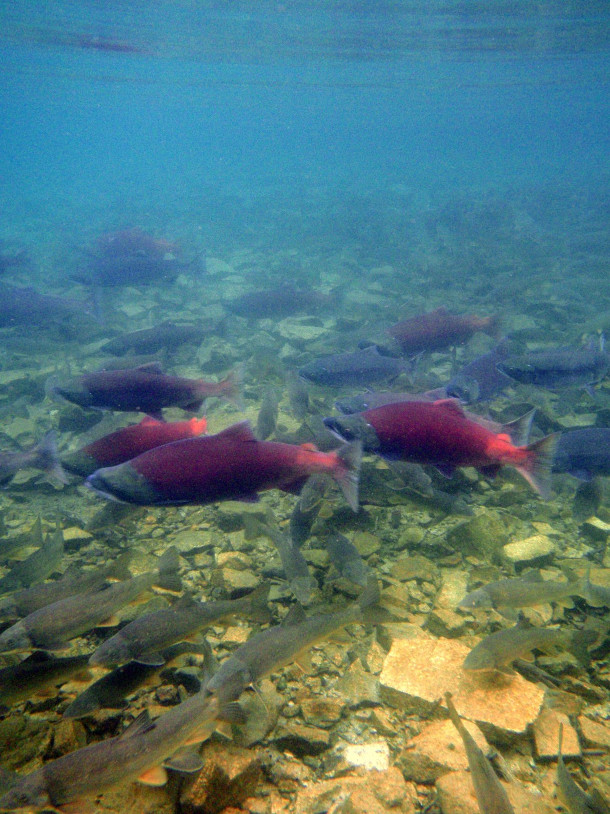
Salmon were very abundant before European settlers arrived because of Indigenous stewardship practices, such as allowing the bigger fish to spawn. These fish were then eaten by bears, pine martens, and other animals, who left carcasses on the forest floor, which would decay and ultimately provide nutrients for trees. (Photo: Dan Young, Wikimedia Commons, Public Domain)
DOERING: Must smell pretty powerful.
SIMARD: And it's pretty - it's spiritually powerful. And there are grizzlies there, but what they're doing is they're carrying the fish into the forest, and they're decaying. They eat a lot of them below the mother trees because there's protection from predators, and then they only take a portion. They just eat the brains and the guts, and they leave the rest of the flesh, which decays into the soil. And so then, of course, the mycorrhizas pick up those amino acids and proteins and deliver them straight into the trees, so the trees are full of salmon, and they're very, very productive. And what we have found in these salmon forests, where the most productive salmon runs are, is that we have the biggest carbon pools that we've ever measured along the Pacific coast that anybody's ever measured, more than an Amazon rainforest, and it's because the salmon are fertilizing the soil, and the reason the salmon is abundant is because the people were looking after the salmon runs, right. So you see this link between human stewardship, salmon, abundance, productivity of forests, carbon sinks, global change - it all fits together.
CURWOOD: So let's go into the book, per se. We've been talking about your science and your understanding, and how trees can talk to each other and their version of consciousness, but you also have a wonderful personal memoir in here. And when you talk about life and death, there are two rather difficult deaths that you go through in this volume. We have your student who discovered that the Douglas fir recognizes the little ones around it, and then you lose her in this process, and then you also lose your mom in the middle of this, so how did each of these losses affect you, this book, your view of the forest? You have this line that your mother said that she was going to infinity.
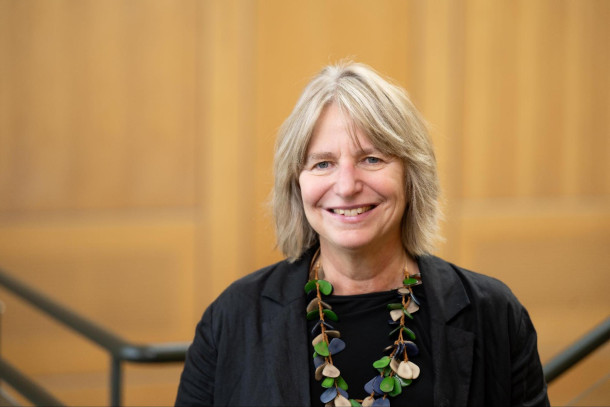
Suzanne Simard is a professor of Forest Ecology at the University of British Columbia and author of When the Forest Breathes: Renewal and Resilience in the Natural World. (Photo: Suzanne Simard)
SIMARD: Yeah, well, first I'll talk about Amanda. So, Amanda was my PhD student. She was also a master's student. She'd been with me for 10 years. That's a long time. If you have doctoral students and graduate students, you have a good relationship with them. Amanda was an incredible person. She was on the Canadian national baseball team. She was on the Canadian national hockey team. But she was also a humble student, and at her heart she was a team player. She wanted to investigate that in forests, you know. She worked on what we call kin recognition in trees, and we figured out that Douglas fir can recognize its own kin. So, Amanda had done all these experiments in the greenhouse, in the forest, very careful, like keeping track of all these little trees that were of different genetic families and relationships, and figured out that these old trees could recognize whether the seedlings that were growing up around them were their own offspring, and they would make elbow room for their seedlings, which is really cool, right? What a huge contribution by Amanda Asay. And then she died in a tragic skiing accident. And it was a climate change accident. That's the thing that makes me so sad because she was trying to do her work in the name of solving climate change by understanding the forest and its regenerative specialties, but there was this unusual big snowstorm in where I live, and there was like two meters of snow fell in a very short period of time, and she fell in a tree well. And so, yeah, it was a very difficult period of time, and it was out of, out of sync, right? It was like she was too young. She was only 33 years old, and she still had so much to do, and she'd made this enormous contribution in her short life. In my mom's case, she was older, old, 86, and she lived a full life. She was a real character, and you'll, you'll see the character in the book. But I said to her at the end, I said, 'Mom, you know, where do you think you're going to go after this?" And she says, 'Well, I'm going to infinity." And I was like, that's really cool, because what she understood was the first law of thermodynamics, that energy is neither created nor destroyed, it's simply transformed. And so she was going to be transformed into something off in infinity. And since that time, like, I've really come to understand this, that we are just transforming energy, and so that was a great teaching from both of them, even though it was tragic and very difficult to lose them.
CURWOOD: For just a moment in the theme of the consciousness, we just like to be quiet for just a moment, and then Suzanne has something that she's going to read for us. Just start when you want, Suzanne.
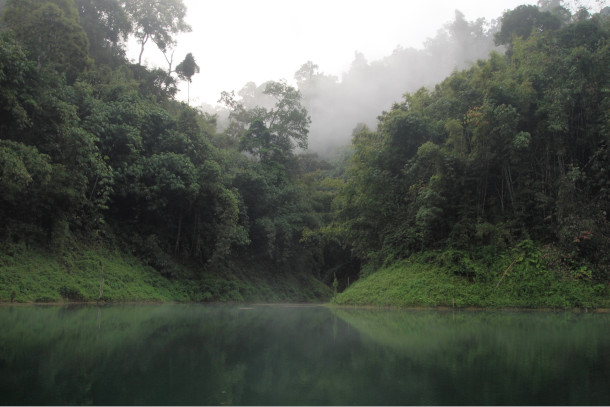
“The living Earth is not an object to be used, but a community of beings; trees that breathe, rivers that remember, soils that nurture, winds that carry stories.” - Suzanne Simard (Photo: Vyacheslav Argenberg, Wikimedia Commons, CC BY-SA 4.0)
SIMARD: As I step into the world in service of the forest, I remember why I walk this path. The living Earth is not an object to be used but a community of beings. Trees that breathe. Rivers that remember. Soils that nurture. Winds that carry stories. I honor the truth that life moves through all things, each root, each wing, stone, stream holds its own form of intelligence and agency and consciousness. May I stand with courage when my voice about this is challenged. May I speak with clarity when my work about this is questioned. May I remain steady when others misunderstand the sacredness I perceive in nature. Let my science be precise, my words honest, and my heart remain open to wonder. I ask for protection of my body, mind, and purpose as I advocate for the living world. May the forests recognize us as allies. May the rivers know that we are listening. May the Earth feel our commitment to its flourishing. As we walk forward as guardians, witnesses, and the humble students of the living world, may truth guide our work, and may the forest endure.
CURWOOD: Suzanne Simard. Thank you so much for coming.
DOERING: Thank you so much, Suzanne.
CURWOOD: Thank you.
SIMARD: Thank you, everybody.
[MUSIC: Moss and Bone]
DOERING: Suzanne Simard joined us for an evening in April of 2026 at the Museum of Science in Boston to discuss her book, When the Forest Breathes: Renewal and Resilience in the Natural World.
Related links:
- Suzanne Simard's 2023 Interview on Living on Earth about her book Finding the Mother Tree
- Find her 2026 book When the Forest Breathes: Renewal and Resilience in the Natural World (Affiliate link helps support LOE and local indie bookstores)
- Author Suzanne Simard’s website
Remembering Environmental Journalist Jim Bruggers
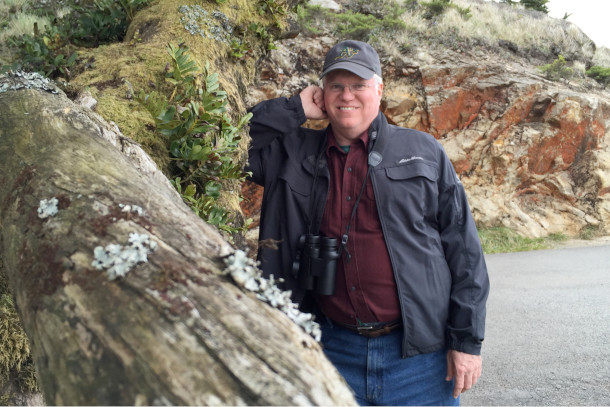
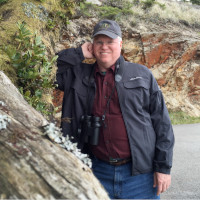
Environmental journalist James Bruggers poses at Point Reyes, a landmark on the Pacific coast in Marin County, California. (Photo: Courtesy of Chris Bruggers)
CURWOOD: A giant of our field is now also “going to infinity”. James Bruggers was a champion of environmental justice reporting who helped build the Society of Environmental Journalists with 13 years on its board and another two as its president. His beat was not easy as an environment reporter for the Courier Journal as he was working in Kentucky, a state that was a major coal producer for decades. As a reporter for Inside Climate News, Jim Bruggers appeared on this program discussing environmental racism, so-called “chemical” or “advanced recycling,” and the climate dimensions of key elections.
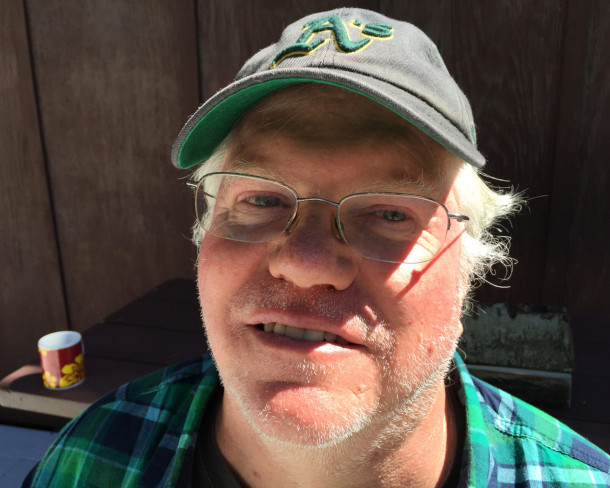
James Bruggers started his environmental journalism career in 1999. (Photo: Courtesy of Chris Bruggers)
Jim passed away on June 16th at the age of 68 after a battle with thyroid cancer and pneumonia. We are sad and Jim, you will be deeply missed. But the many journalists you mentored will carry on your spirit of ensuring environmental injustice is brought to light and remedied.
Related links:
- Inside Climate News’ Memorial for James Bruggers
- James Bruggers’ profile at Inside Climate News
- Our latest conversation with James Bruggers
[MUSIC: Lafayette Parade]
CURWOOD: Living on Earth is produced by the World Media Foundation. Our crew includes Naomi Arenberg, Paloma Beltran, Mia DiLorenzo, Abby Edgecumbe, Swayam Gagneja, Mark Kausch, Mark Seth Lender, Don Lyman, Ashanti Mclean, Nhung Nguyen, Aynsley O’Neill, Sophia Pandelidis, Jake Rego, Andrew Skerritt, Bella Smith, and El Wilson.
DOERING: Tom Tiger engineered our show. Allison Lirish Dean composed our themes. You can hear us anytime at L-O-E dot org, Apple Podcasts and YouTube Music, and like us please, on our Facebook page, Living on Earth. Find us on Instagram, Threads and BlueSky at living on earth radio. And we always welcome your feedback at comments at loe.org. I’m Jenni Doering
CURWOOD: And I’m Steve Curwood. Thanks for listening!
ANNOUNCER: Funding for Living on Earth comes from you, our listeners, and from the University of Massachusetts, Boston, in association with its School for the Environment, developing the next generation of environmental leaders. And from the Grantham Foundation for the protection of the environment, supporting strategic communications and collaboration in solving the world’s most pressing environmental problems.
ANNOUNCER 2: PRX.
Living on Earth wants to hear from you!
Living on Earth
62 Calef Highway, Suite 212
Lee, NH 03861
Telephone: 617-287-4121
E-mail: comments@loe.org
Newsletter [Click here]
Donate to Living on Earth!
Living on Earth is an independent media program and relies entirely on contributions from listeners and institutions supporting public service. Please donate now to preserve an independent environmental voice.
NewsletterLiving on Earth offers a weekly delivery of the show's rundown to your mailbox. Sign up for our newsletter today!
 Sailors For The Sea: Be the change you want to sea.
 The Grantham Foundation for the Protection of the Environment: Committed to protecting and improving the health of the global environment.
 Contribute to Living on Earth and receive, as our gift to you, an archival print of one of Mark Seth Lender's extraordinary wildlife photographs. Follow the link to see Mark's current collection of photographs.
 Buy a signed copy of Mark Seth Lender's book Smeagull the Seagull & support Living on Earth
© Copyright World Media Foundation. All Rights Reserved
Home | Contact | RSS | Donate | Newsletter